Computer Science · Ch 10 — Computer Networks
Hub
Hub
A hub is a simple network device that connects multiple computers or other devices in a wired local area network (LAN). Its job is to receive data from one device and broadcast it to every other device connected to it.
An Ethernet hub has a number of ports — the textbook shows a hub with 8 ports. Each port connects to one device using a cable. When data arrives on any one of these lines, the hub does not check where the data is meant to go. Instead, it sends that data out on all the other lines. Every device connected to the hub receives the data, even if only one device was the intended recipient.
This broadcast behaviour creates a major limitation. If two devices send data at exactly the same time, the signals collide on the hub. The collision corrupts both transmissions, and the data must be resent. This makes a hub inefficient as the number of devices grows, because more devices mean more chances of collision. …
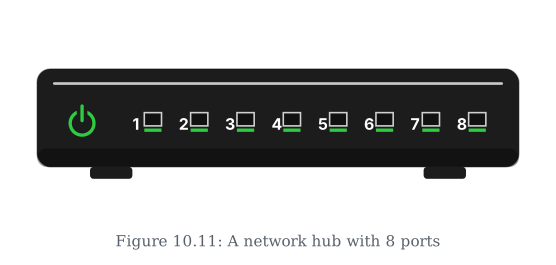
Drawn by us to help you understand the concept clearly, and verified to make sure it's accurate. For exams, practice from your textbook's own diagram.
A hub is one of the simplest networking devices: whatever signal arrives on ANY one of its ports gets copied out to EVERY other port, with no filtering or decision-making at all. This 8-port hub can connect up to 8 devices — plug a computer into any port, and whatever it sends gets broadcast to all the other 7 ports. …