Biology · Ch 7 — Human Health and Disease
Drugs and Alcohol Abuse
Drugs and Alcohol Abuse
Why This Matters
Health is not just the absence of disease — it is a state of complete physical, mental and social well-being. Drug and alcohol abuse directly attacks all three dimensions. The NCERT textbook places this topic in the chapter Human Health and Disease because substance abuse is a major preventable cause of disease, disability and premature death. Understanding how drugs and alcohol harm the body, why people start using them, and what can be done to prevent abuse is essential for both personal health and public health.
What Are Drugs and Alcohol Abuse?
Drugs, in the medical sense, are chemicals that alter the functioning of the body or mind. Many are used therapeutically — for example, to relieve pain, fight infection, or treat mental illness. Alcohol, in small amounts, has been part of human culture for centuries. But when these substances are taken for non-medical reasons, in excessive amounts, or in ways that harm the individual or society, it becomes abuse.
The textbook makes a clear distinction: drug abuse is the misuse of any drug (including prescription drugs) for purposes other than those intended. Alcohol abuse is the excessive or harmful use of alcoholic beverages. Both are forms of substance abuse.
Common Drugs of Abuse
The NCERT text lists several categories of drugs that are commonly abused. Each has a different mechanism of action and different health consequences.
Opioids (Narcotics)
- Examples: Heroin, morphine, codeine
- Source: Derived from the opium poppy (Papaver somniferum)
- How they work: Bind to opioid receptors in the brain, producing pain relief, euphoria, and sedation
- Health effects: Respiratory depression, constipation, tolerance (need for higher doses), physical dependence, withdrawal symptoms
- Route of abuse: Often injected, smoked, or snorted
Cannabinoids
- Examples: Marijuana (ganja), hashish (charas), hash oil
- Source: Cannabis sativa plant
- How they work: Bind to cannabinoid receptors in the brain, altering mood, perception, and memory
- Health effects: Impaired coordination, short-term memory loss, increased heart rate, anxiety, paranoia; long-term use can lead to dependence and mental health problems
- Route of abuse: Smoked or eaten
Coca Alkaloid (Cocaine)
- Source: The coca plant Erythroxylum coca, native to South America
- How it works: Interferes with the transport of the neurotransmitter dopamine; a potent central-nervous-system stimulant producing euphoria and increased energy
- Health effects: An excessive dose causes hallucinations
- Route of abuse: Usually snorted (commonly called "coke" or "crack")
Hallucinogenic Plants
- Examples: Atropa belladonna and Datura — both plants with genuine hallucinogenic properties, used for centuries in folk medicine, religious ceremonies and rituals; cannabinoids can also produce hallucinogenic effects at excessive doses
- Health effects: Altered perception of reality; can trigger panic or psychosis
- Route of abuse: Usually taken orally
Misused Medicines
- Examples: Barbiturates, amphetamines, and benzodiazepines — legitimate medicines normally prescribed to help patients cope with conditions like depression and insomnia, but often taken outside medical supervision
- Also note: Morphine is a genuinely effective sedative and painkiller, especially valuable for patients recovering from surgery — but it too is subject to abuse
What turns a medicine into "drug abuse" is not the chemical itself but the purpose and amount: taking any of these substances for a purpose other than medicinal use, or in amounts and frequency that impair physical, physiological or psychological function, constitutes abuse.
Tobacco and Smoking
Tobacco has been used by humans for more than 400 years — smoked, chewed, or used as snuff. It contains a large number of chemical substances, including the alkaloid nicotine.
Nicotine stimulates the adrenal gland to release adrenaline and nor-adrenaline into the bloodstream, both of which raise blood pressure and increase heart rate. Smoking is associated with a higher incidence of cancers of the lung, urinary bladder and throat, along with bronchitis, emphysema, coronary heart disease, and gastric ulcers. Chewing tobacco carries an increased risk of oral cancer. Smoking also raises the carbon monoxide content of the blood, which reduces the concentration of oxygen bound to haemoglobin — causing oxygen deficiency throughout the body.
Every cigarette packet carries a statutory warning about these dangers, yet smoking remains widespread among both the young and the old. Anyone trying to quit generally needs counselling and medical help to overcome the habit.
Alcohol Abuse
Alcohol is the most widely abused substance in India and worldwide. The textbook emphasises that alcohol abuse is not just about drinking too much — it is a pattern of drinking that leads to significant impairment or distress.
Short-term effects of alcohol:
- Impaired judgment and coordination
- Slurred speech
- Nausea and vomiting
- Blackouts (memory loss)
- Increased risk of accidents and injuries
Long-term effects of chronic alcohol abuse: the real chapter keeps this simple — chronic use of alcohol (like chronic drug use generally) damages the nervous system and the liver, causing cirrhosis (scarring of the liver). Alcohol use that begins in adolescence is also linked to heavier drinking in adulthood, and using alcohol or drugs during pregnancy can adversely affect the foetus.
Why Do People Start Using Drugs and Alcohol?
The textbook identifies several key factors that contribute to initiation of substance abuse:
- Curiosity and experimentation — especially among adolescents and young adults
- Peer pressure — the desire to fit in with a group
- Stress relief — using substances to cope with academic, social, or family pressures
- Escape from reality — to avoid dealing with emotional pain or difficult situations
- Availability — easy access to drugs or alcohol
- Family history — genetic predisposition and family environment
- Mental health disorders — depression, anxiety, or other conditions that increase vulnerability
Addiction and Dependence
Addiction is a psychological attachment to the effects a drug produces — such as euphoria or a temporary feeling of well-being — that drives a person to keep taking it even when it is not needed, or even after its use has become self-destructive. With repeated use, the body's receptors become more tolerant, so higher doses are needed to produce the same effect; this pulls the user into a vicious circle of escalating use. Even a single use can be a fore-runner to addiction.
Dependence is the body's tendency to show an unpleasant withdrawal syndrome — anxiety, shakiness, nausea, sweating — if a regular dose is abruptly stopped. In some cases withdrawal can be severe and even life-threatening, requiring medical supervision. Dependence can also push a person to ignore social norms in order to get funds to sustain the habit, causing serious social-adjustment problems.
Dependence and addiction are related but distinct: dependence is the body's physical adaptation to a drug (shown by withdrawal symptoms), while addiction is the psychological compulsion that keeps someone using it despite the harm it causes.
Effects of Drug and Alcohol Abuse on the Individual
The textbook lists several major health consequences:
- Physical health: Damage to brain, heart, liver, lungs, kidneys; increased risk of infections (especially from needle sharing — HIV, hepatitis B and C); malnutrition; accidental injuries
- Mental health: Depression, anxiety, paranoia, psychosis, memory loss, personality changes
- Social health: Strained relationships, loss of employment, financial ruin, legal problems, violence, suicide
Effects on Family and Society
Substance abuse does not happen in isolation. The textbook highlights:
- Family: Emotional and financial burden; children of substance abusers are at higher risk of abuse, neglect, and developing their own substance problems
- Society: Increased healthcare costs, lost productivity, crime, accidents, spread of infectious diseases (HIV, hepatitis), burden on law enforcement and social services
Prevention and Control
The NCERT text emphasises that prevention is far better than cure. Key strategies include:
Individual Level
- Education about the dangers of drugs and alcohol
- Building self-esteem and coping skills
- Learning to say no to peer pressure
- Developing healthy hobbies and interests
- Seeking help early if problems arise
Family Level
- Open communication between parents and children
- Setting clear rules and expectations
- Monitoring children's activities and friends
- Providing emotional support and a stable home environment
School and Community Level
- Drug education programmes in schools …
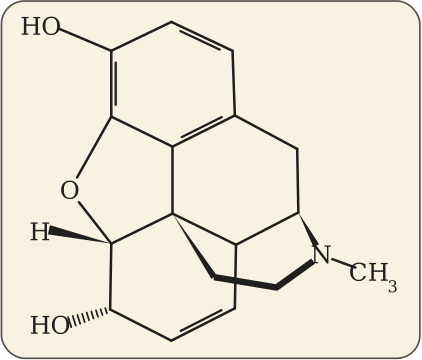
Drawn by us to help you understand the concept clearly, and verified to make sure it's accurate. For exams, practice from your textbook's own diagram.
Figure 7.7 shows the skeletal chemical structure of morphine. It is drawn as a standard organic chemistry line-angle diagram, where each vertex represents a carbon atom and the bonds are shown as straight lines. The molecule has a characteristic T-shaped, three-ringed framework: a partially saturated phenanthrene core with an oxygen bridge connecting two of the rings.
The structure includes several key functional groups. There is a tertiary amine group (a nitrogen atom bonded to a methyl group, —NCH₃) attached to one of the rings. Two hydroxyl groups (—OH) are present: one on the aromatic ring (a phenolic —OH) and one on the alicyclic ring (an alcoholic —OH). There is also an ether linkage (an oxygen atom bridging two carbon atoms) that forms the third ring. A carbon-carbon double bond appears in one of the rings. …
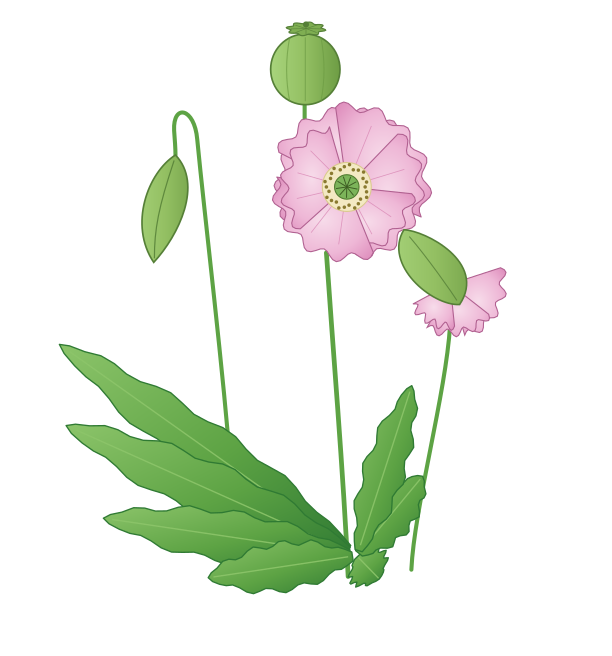
Drawn by us to help you understand the concept clearly, and verified to make sure it's accurate. For exams, practice from your textbook's own diagram.
The figure is a botanical illustration of the opium poppy plant, Papaver somniferum, shown from its root system up to the flowering top: a tall, erect stem with alternating leaves, a single large flower with broad, overlapping petals, and below it the developing seed capsule.
The capsule is the part of the plant that is lanced to collect a milky latex, which is the source of morphine — the alkaloid used medically as a potent painkiller (analgesic), and also the compound from which the abused drug heroin is derived by acetylation. …
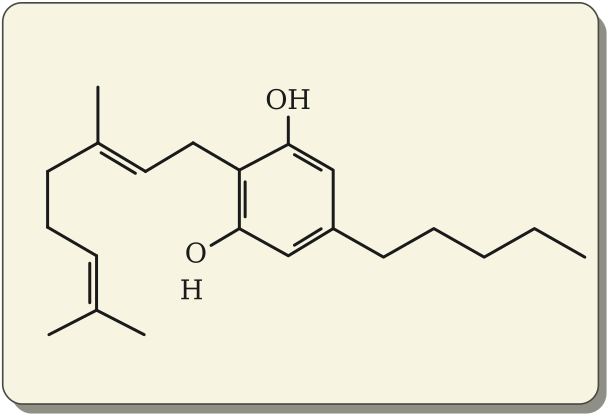
Drawn by us to help you understand the concept clearly, and verified to make sure it's accurate. For exams, practice from your textbook's own diagram.
Figure 7.9 shows the skeletal chemical structure of a cannabinoid molecule. This is a line‑angle diagram typical of organic chemistry, where each vertex represents a carbon atom and hydrogen atoms are omitted for clarity. The molecule has a tricyclic core: three fused rings — a benzene ring (aromatic), a pyran ring (six‑membered with an oxygen atom), and a cyclohexene ring (six‑membered with one double bond). Attached to this core is a five‑carbon alkyl side chain (a straight chain of five carbon atoms) and a hydroxyl group (–OH) on the benzene ring. The overall shape is compact and rigid due to the ring system.
The figure is labelled simply as “Cannabinoid molecule” — no individual atoms or bonds are named in the caption, but the structure itself is the standard representation of Δ⁹‑tetrahydrocannabinol (THC), the primary psychoactive component of cannabis. The skeletal formula shows exactly how the atoms are connected: the oxygen in the pyran ring bridges two rings, and the double bond in the cyclohexene ring is positioned between two specific carbons.
The textbook places this figure in the section on Drugs and Alcohol Abuse (Section 7.5). The structure is not discussed in the surrounding text — it serves as a visual reference for the chemical class of cannabinoids, which act on cannabinoid receptors (CB1 and CB2) in the brain and immune system. The figure helps students recognise that cannabinoids are not a single compound but a family of molecules sharing this core skeleton. …
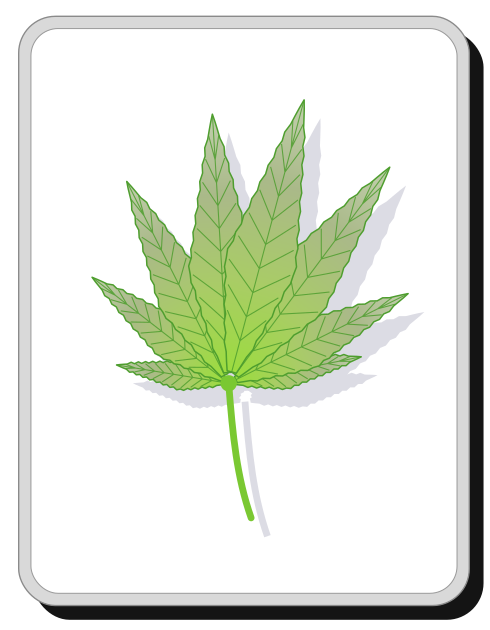
Drawn by us to help you understand the concept clearly, and verified to make sure it's accurate. For exams, practice from your textbook's own diagram.
The figure is a simple botanical drawing of the leaves of Cannabis sativa. It shows a single stem with several leaves attached at different points. Each leaf is palmate — meaning it has multiple leaflets spreading out from a central point, like the fingers of a hand. The leaflets are narrow, pointed, and have serrated (saw-toothed) edges. The drawing is not a photograph; it is a clean, labelled line diagram typical of a textbook illustration.
The caption identifies the plant as Cannabis sativa, and the text in the section explains that this plant is the source of several psychoactive drugs: marijuana, hashish, charas, and ganja. These are all preparations made from different parts of the plant — leaves, flowers, and resin. The figure serves as a visual anchor for the discussion of drug abuse that follows in the chapter. …
Drawn by us to help you understand the concept clearly, and verified to make sure it's accurate. For exams, practice from your textbook's own diagram.
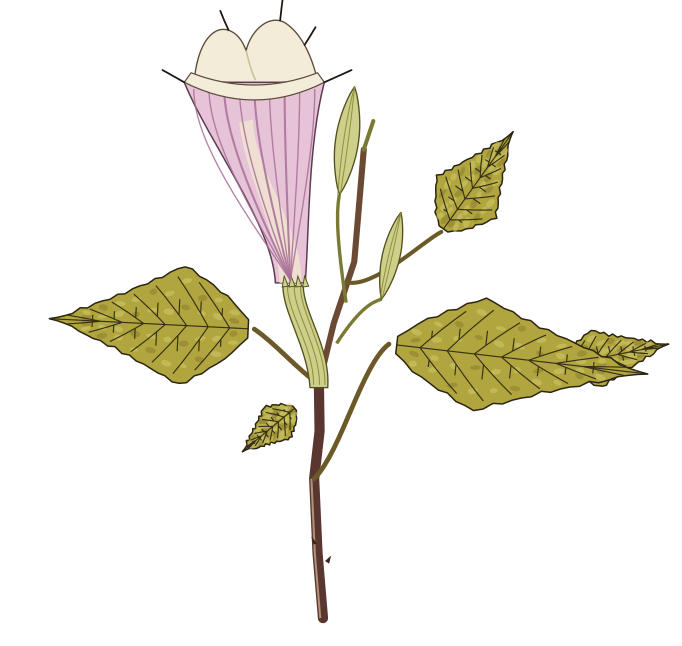
The figure shows a simple botanical drawing of a flowering branch of Datura. The branch is depicted with a central stem, from which several leaves and a single trumpet-shaped flower emerge. The leaves are large, broad, and have a characteristic toothed or lobed margin — a typical feature of Datura foliage. The flower is drawn in a side view, showing its long, tubular corolla that flares open at the end into five pointed lobes. The calyx (the green, leaf-like structure at the base of the flower) is also visible, enclosing the lower part of the flower tube.
No other labels, arrows, or annotations appear in the figure. The drawing is a straightforward, unadorned illustration meant to help students visually identify the plant. The caption simply identifies it as a flowering branch of Datura. …