Physical Education · Ch 2 — Olympic Value Education
Olympic Movement Structure
Olympic Movement Structure
Under the supreme authority and leadership of the International Olympic Committee (IOC), the Olympic Movement encompasses the organisations, athletes and other persons who agree to be guided by the Olympic Charter. The goal of the Movement is to contribute to building a peaceful and better world by educating youth through sport practised in accordance with Olympism and its values.
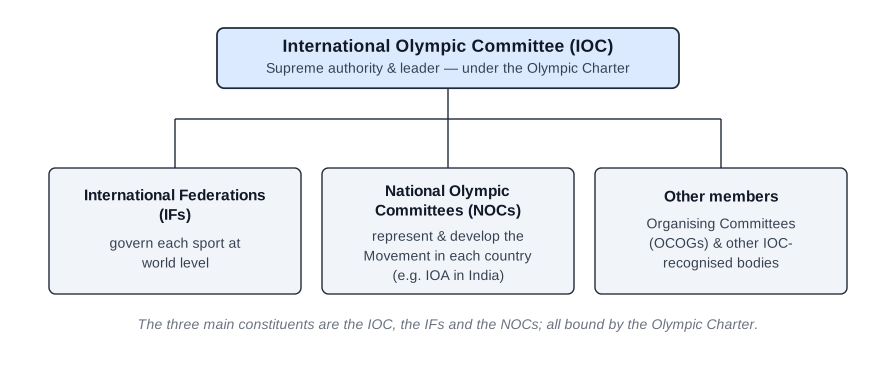
Drawn by us to help you understand the concept clearly, and verified to make sure it's accurate. For exams, practice from your textbook's own diagram.
An organisation chart of the Olympic Movement. At the top is a box 'International Olympic Committee (IOC) - supreme authority, under the Olympic Charter'. A line leads down to three main-constituent boxes side by side: 'International Federations (IFs) - govern each sport worldwide', 'National Olympic Committees (NOCs) - represent the Movement in each country', and 'Other members - OCOGs and IOC-recognised bodies that stage and su …
Movement, Committee and Games - three different things
It helps to keep three terms distinct. The Olympic Movement is the entire worldwide network of organisations and people described below. The International Olympic Committee is only one body within that Movement, though the leading one. The Olympic Games is the actual sporting event the Movement exists to stage every four years - the visible result of the whole structure working together, not the structure itself.
The three main constituents
The three main constituents of the Olympic Movement are:
- the International Olympic Committee (IOC) - the apex, leading body;
- the International Sports Federations (IFs) - which govern each sport worldwide;
- the National Olympic Committees (NOCs) - which represent the Movement in each country.
Other members
In addition to its three main constituents, the Movement also encompasses:
- the Organising Committees for the Olympic Games (OCOGs), formed in each host city to actually stage that edition of the Games - each OCOG is wound up once its own Games are complete, since it exists only for that one edition;
- the national associations, clubs and persons belonging to the IFs and NOCs - particularly the athletes, whose interests are a fundamental element of the Movement's action, as well as the judges, referees, coaches and other sports officials and technicians;
- other organisations and institutions recognised by the IOC.