Biology · Ch 2 — Biological Classification
Basidiomycetes
Basidiomycetes
Commonly known forms of Basidiomycetes are mushrooms, bracket fungi and puffballs. They grow in soil, on logs and tree stumps, and in living plant bodies as parasites — for example, rusts and smuts.
Structural and reproductive features:
- the mycelium is branched and septate
- asexual spores are generally not found, but vegetative reproduction by fragmentation is common
- the sex organs are absent, but plasmogamy is brought about by the fusion of two vegetative or somatic cells of different strains or genotypes
- the resultant structure is dikaryotic, which ultimately gives rise to the basidium
- karyogamy and meiosis take place in the basidium, producing four basidiospores …
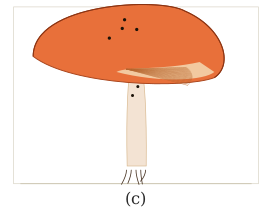
Drawn by us to help you understand the concept clearly, and verified to make sure it's accurate. For exams, practice from your textbook's own diagram.
This figure presents three fungi, each representing a different class. In (a) Mucor is a phycomycete, seen as a mass of fine, aseptate coenocytic threads (mycelium) that produce spores endogenously within sporangia. In (b) Aspergillus is an ascomycete; the drawing shows its conidiophore, a special upright mycelium bearing chains of asexual conidia produced exogenously at the tip. In (c) Agaricus, the common mushroom, is a basidiomycete with the familiar fruiting body called a basidiocarp — a stalk topped by an umbrella-like cap whose underside carries the basidia t …