Biology · Ch 19 — Chemical Coordination and Integration
Mechanism of Hormone Action
Mechanism of Hormone Action
Hormones act only on their target tissues, and they do so by binding to specific proteins known as hormone receptors, which are present in those target tissues alone. The binding of a hormone to its receptor produces a hormone-receptor complex, and it is this complex that sets off the tissue's response. Each receptor recognises just one hormone, so receptors are highly specific. Once the complex forms, it brings about biochemical changes in the target tissue, and through these changes the tissue's metabolism — and therefore its physiological functions — is regulated.
Two kinds of receptor
Receptors are located in two different places within a target cell, giving two categories:
- Membrane-bound receptors — found on the cell membrane, at the cell surface.
- Intracellular receptors — found inside the cell, and most of these are nuclear receptors present in the nucleus.
Hormones grouped by chemical nature
By their chemical make-up, hormones fall into four groups:
- Peptide, polypeptide and protein hormones — for example insulin, glucagon, the pituitary hormones and the hypothalamic hormones.
- Steroids — for example cortisol, testosterone, estradiol and progesterone.
- Iodothyronines, the thyroid hormones.
- Amino-acid derivatives — for example epinephrine.
How each type acts
The chemical nature of a hormone decides which receptor it uses and how it produces its effect:
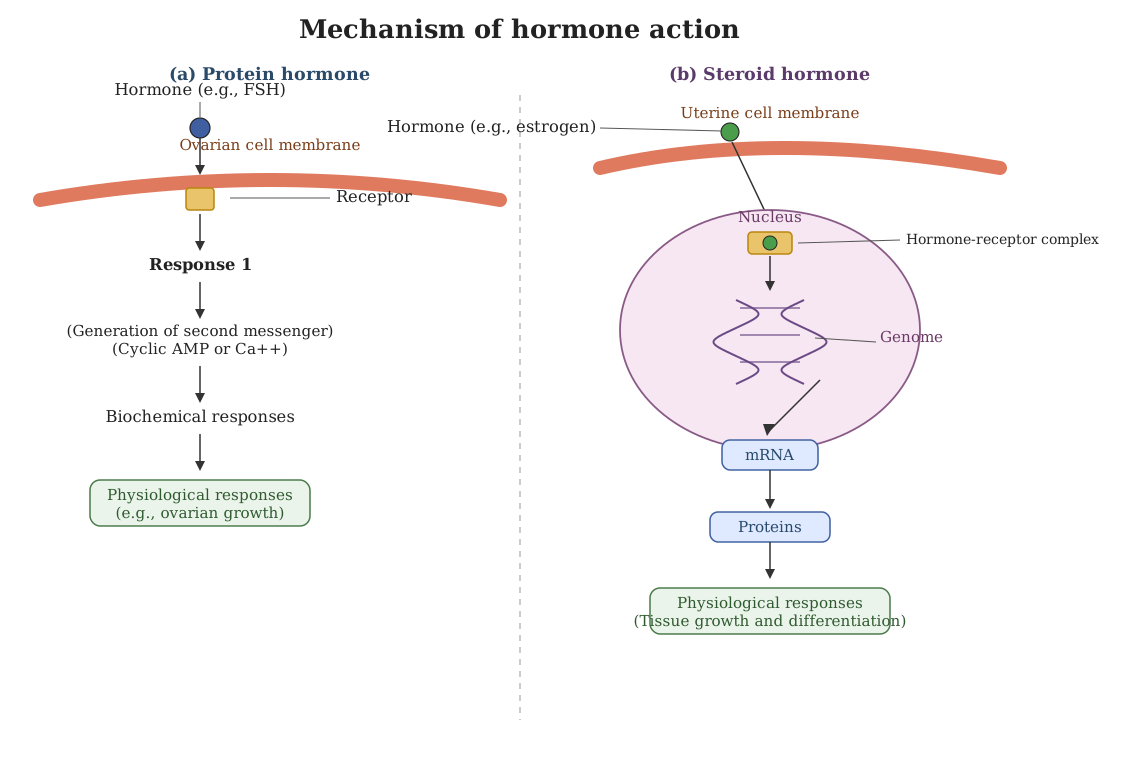
- Hormones acting through membrane-bound receptors (typically the protein and peptide hormones) normally do not enter the target cell. Instead, their binding at the surface generates second messengers inside the cell — such as cyclic AMP, IP3 or calcium ions — and these second messengers then regulate the cell's metabolism. …
Drawn by us to help you understand the concept clearly, and verified to make sure it's accurate. For exams, practice from your textbook's own diagram.
This figure contrasts the two ways a hormone gets its message into a target cell, decided by whether its receptor is on the cell surface or inside the cell. On the left, a water-soluble hormone such as a protein or peptide cannot cross the cell membrane, so it binds a membrane-bound receptor on the outside. This binding generates a second messenger inside the cell — for example cyclic AMP or calcium ions — which then changes the cell's activity. On the right, a lipid-soluble hormone such as a steroid or thyroid hormone passes straight through the membrane and binds an intracellular receptor, forming a hormone-receptor complex. This complex moves into the nucleus and acts on the DNA, switching genes on or off to change protein synthe …