Biology · Ch 5 — Morphology of Flowering Plants
Structure of Monocotyledonous Seed
Structure of Monocotyledonous Seed
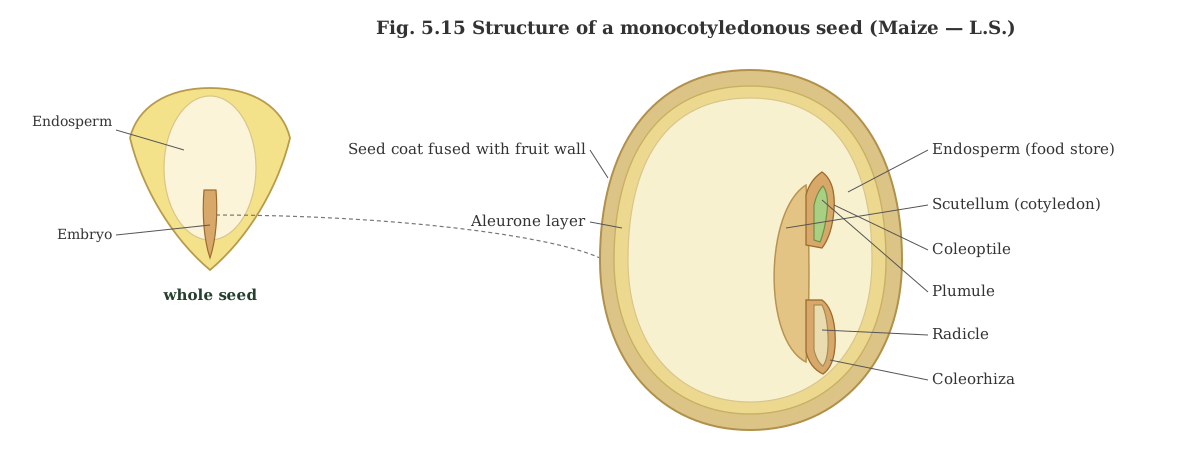
Generally, monocotyledonous seeds are endospermic, but some, as in orchids, are non-endospermic. The seed structure of a cereal grain such as maize illustrates the typical monocotyledonous condition.
In a maize grain the seed coat is membranous and is generally fused with the fruit wall. The endosperm is bulky and stores the reserve food of the seed. Its outer covering separates the endosperm from the embryo by a proteinous layer called the aleurone layer.
The embryo is small and is situated in a groove at one end of the endosperm. It consists of:
- a single large, shield-shaped cotyledon known as the scutellum, and
- a short embryonal axis bearing a plumule and a radicle. …
Drawn by us to help you understand the concept clearly, and verified to make sure it's accurate. For exams, practice from your textbook's own diagram.
This figure shows a monocot seed, using a grain such as maize. Here the seed coat is thin and, in cereals, is fused with the surrounding fruit wall, so seed and fruit are hard to separate. Most of the grain is filled with endosperm, a food store; its outermost proteinous layer is the aleurone layer. The embryo is small and lies to one side. It has a single large shield-shaped cotyledon called the scutellum, which absorbs food from the endosperm. The embryonal axis carries the radicle, the young root, which is sheathed by a protective covering called th …