Informatics Practices · Ch 5 — Internet and Web
Router
Router
A router is a network device that does more than just forward data — it examines the data it receives, decides how to handle it, and can send it across different types of networks. While a hub or a switch works within a single local network, a router connects a local area network (LAN) to the internet, and can even connect networks that use different technologies.
How a router works
When data arrives at a router, the router analyses the data being carried over the network. It can decide or alter how that data is packaged before sending it onward. This is a key ability that hubs and switches lack.
For example, suppose data has been divided into packets of a certain size. If those packets need to travel over a different type of network that cannot handle such large packets, the router will repackage the data into smaller packets and then send them over that network. This repackaging allows data to move between networks with different technical limits.
Wired and wireless routers
A router can be either wired or wireless.
- A wireless router can provide Wi-Fi access to smartphones, laptops, and other devices.
- Most wireless routers also contain physical ports to provide wired internet access to devices that use Ethernet cables.
Home routers and their dual role …
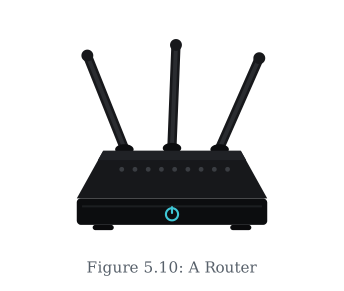
Drawn by us to help you understand the concept clearly, and verified to make sure it's accurate. For exams, practice from your textbook's own diagram.
This photograph shows the router — in its most familiar form, the home wireless unit. The three tall antennas mark it as a Wi-Fi model: besides linking the local area network to the internet, it broadcasts a wireless signal so smartphones and other devices can join without cables. The status indicators along the front edge report the device's activity. Recognising this everyday box anchors the section's idea of what makes a router different from a hub or …