Q.What is DNA fingerprinting technique? Describe in detail with diagram. OR Write an essay on the applications of biotechnology in agriculture.
🔒You're viewing a preview — the full solution, concept, methods & PYQ mapping are locked.
🔒 Start your 14-day free trial to unlock the full solution →Concept understanding — Genetically Modified Organisms
Imagine you have a recipe for a simple sponge cake. Now, suppose you want that cake to also have chocolate chips inside it. You wouldn't throw away the original recipe and start from scratch. Instead, you would take the basic cake batter and deliberately add chocolate chips to it. You have modified the original recipe to give it a new, useful property.
A Genetically Modified Organism (GMO) works on the same principle, but instead of adding chocolate chips to batter, scientists add a specific gene (a tiny instruction manual inside a living cell) from one organism into the DNA of another organism. The result is a living thing — a plant, animal, or microbe — whose genetic material has been artificially altered in a way that does not occur naturally through mating or natural recombination.
The key word here is deliberate. GMOs are not the same as the natural evolution or selective breeding that farmers have done for thousands of years (like breeding wolves into dogs). Selective breeding mixes thousands of genes at once, like shuffling two entire decks of cards. Genetic modification is like taking a single, specific card from one deck and inserting it into a specific spot in another deck.
How does it actually work? (The core idea)
Every living thing — from a bacterium to a mango tree to a human — carries its hereditary information in a molecule called DNA. A gene is a specific segment of that DNA that contains the instructions for making one particular protein. That protein then gives the organism a particular trait, like the colour of a flower or the ability to resist a pest.
In genetic modification, scientists:
- Identify a useful gene from one organism (say, a gene from a soil bacterium that makes a protein toxic to certain insects).
- Isolate that gene and copy it.
- Insert that gene into the DNA of a different organism (say, a cotton plant).
- The cotton plant now reads that new gene and starts producing the insect-killing protein. The cotton plant has been genetically modified to be pest-resistant.
Why does this matter? (The real-world significance)
GMOs are not just a lab curiosity. They are a major part of modern agriculture and medicine. The NCERT textbook highlights two main areas where this technology has had a huge impact:
1. Agriculture: Making crops more useful
The most common GMOs you will encounter are crop plants. The goal is usually to give the plant a new, valuable trait without having to breed it for many generations.
- Pest resistance (Bt crops): A gene from the bacterium Bacillus thuringiensis (Bt) is inserted into crops like cotton and corn. This gene produces a protein that kills specific insect pests (like the cotton bollworm). The plant protects itself, so farmers need to spray fewer chemical pesticides.
- Herbicide tolerance: Some crops are modified to be resistant to a specific weed-killer (herbicide). This allows farmers to spray the herbicide to kill weeds without harming the crop itself.
- Increased nutritional value: A famous example is Golden Rice, which is genetically modified to produce beta-carotene (which the body converts to Vitamin A). This was developed to address Vitamin A deficiency in regions where rice is a staple food.
The NCERT textbook specifically mentions Bt cotton as a major success story in India. It has been widely adopted by farmers because it reduces the need for pesticides and can lead to higher yields. However, it also raises important questions about cost, seed patents, and long-term effects on soil and biodiversity — issues that are debated in economics and environmental studies.
2. Medicine: Producing life-saving drugs
This is where GMOs have had an arguably even more profound impact. Instead of modifying whole plants, scientists often modify microorganisms like bacteria or yeast to act as tiny factories.
- Human Insulin (Humulin): Before GMOs, people with diabetes used insulin from cows or pigs, which could cause allergic reactions. Scientists inserted the human gene for insulin into E. coli bacteria. The bacteria then multiplied and produced large quantities of pure human insulin. This was the first-ever commercial GMO product approved for human use.
- Vaccines and other proteins: Many modern vaccines (like the Hepatitis B vaccine) and other therapeutic proteins are now produced using genetically modified yeast or animal cells. This is safer, cheaper, and more scalable than extracting them from human or animal tissues.
A balanced perspective (What you should know) …
DNA fingerprinting is a technique that identifies individuals by the pattern of their VNTRs (variable number of tandem repeats / satellite DNA), which differ from person to person. Steps: DNA isolation → restriction digestion → gel electrophoresis → Southern blotting → hybridisation with labelled VNTR probe → autoradiography to reveal the band pattern. Uses: forensic identification, paternity disputes. …
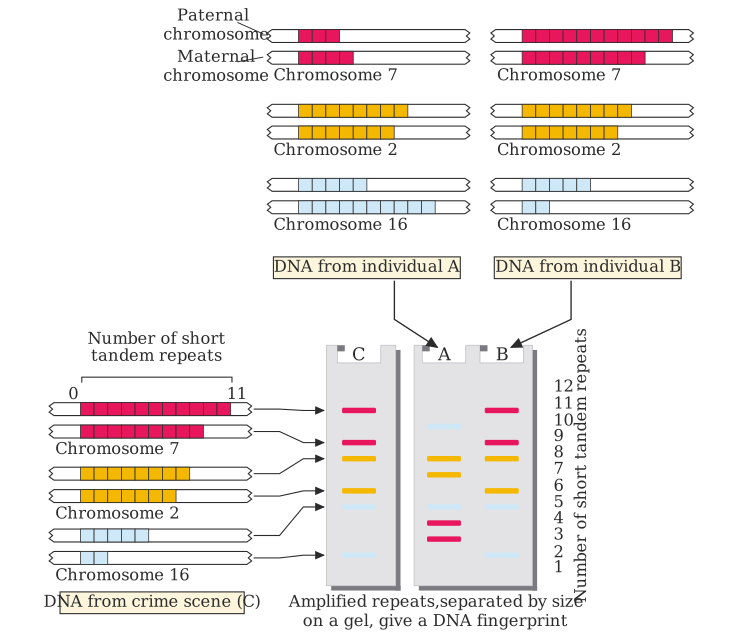
DNA fingerprinting identifies an individual from the unique pattern of repetitive DNA (VNTRs/satellite DNA). Steps: isolate DNA → cut with restriction enzymes → separate by electrophoresis → Southern blot → hybridise with a labelled VNTR probe → autoradiography. Used in forensics and paternity disputes.
What is DNA fingerprinting?
DNA fingerprinting is a technique to identify an individual on the basis of the unique pattern of their DNA. It was developed by Alec Jeffreys. It uses the fact that a large part of the genome consists of repetitive DNA sequences called VNTRs (Variable Number of Tandem Repeats) or satellite DNA, whose number of repeats varies from individual to individual (except identical twins). This variation, called polymorphism, is the basis of the technique; the VNTR pattern is inherited from the parents.
Steps of the technique:
- Isolation of DNA — extract DNA from a sample (blood, hair, semen, tissue, etc.).
- Restriction digestion — cut the DNA into fragments using restriction endonucleases.
- Separation by gel electrophoresis — separate the fragments according to size on an agarose gel.
- Southern blotting — transfer (blot) the separated single-stranded DNA fragments onto a nitrocellulose/nylon membrane.
- Hybridisation — treat the membrane with a labelled VNTR probe (radioactive/marked), which binds to complementary VNTR sequences.
- Autoradiography — expose the membrane to an X-ray film; the probe-bound bands appear as a pattern of dark bands — this is the DNA fingerprint, unique to each individual. …
Showing the 12 most recent of 46 on this concept.
- CBSE 2026Set 57/3/11 markMCQQ.Golden rice is a promising transgenic crop. When released for cultivation, it will help in : (A) Producing petrol-like fuel (B) Reduction of Vitamin A deficiency in humans (C) Pest resistance (D) Herbicide tolerance
›Reveal solutionSolution
Golden rice is a genetically modified crop engineered to produce beta-carotene, which the human body converts into Vitamin A, making it a tool to combat Vitamin A deficiency.
Golden rice is one of the most well-known examples of a genetically modified organism (GMO) developed for humanitarian purposes. To understand what it does, we first need to step back and look at why it was created. Vitamin A deficiency is a serious public health problem in many developing countries, particularly in parts of Asia and Africa where rice is a dietary staple. Rice, however, contains no beta-carotene (the precursor to Vitamin A) in its polished grain. People who rely heavily on rice and lack access to diverse foods like carrots, leafy greens, or animal products often suffer from blindness, weakened immunity, and even death due to this deficiency.
Scientists addressed this by inserting two genes into the rice genome: one from a soil bacterium (Erwinia uredovora) and one from a daffodil plant. These genes enabled the rice plant to produce beta-carotene in the endosperm — the part of the grain we eat. The beta-carotene gives the rice a characteristic golden-yellow colour, hence the name "golden rice." When consumed, the human body converts this beta-carotene into Vitamin A.
NoteGolden rice is not intended to replace a balanced diet or Vitamin A supplements. It is designed as a supplementary intervention for populations where rice is the primary food and access to other sources of Vitamin A is limited. …
- CBSE 2026Set EG1 markQ.Write the name of any one transgenic animal.
›Reveal solutionSolution
A transgenic animal example: the cow Rosie (or a transgenic mouse).
A transgenic (genetically modified) animal is one that carries a foreign (manipulated) gene deliberately introduced into it. A well-known example is the transgenic cow Rosie, which produced human protein-enriched milk (containing human alpha-lactalbumin), making the milk more balanced for human babies.
…
- CBSE 2026Set A1 markMCQQ.Which technique was used to prevent infection of tobacco plants from Meloidegyne incognitia tapeworm?(a) RNA interference(b) Cry protein(c) Somatic hybridisation(d) Pesticide
›Reveal solutionSolution
RNA interference protected tobacco from the nematode; the correct option is (a).
The root parasite Meloidogyne incognita (a nematode, not a tapeworm as the stem loosely states) infects tobacco plants and reduces yield. Protection was achieved using RNA interference (RNAi). Using Agrobacterium as a vector, nematode-specific genes were introduced into the host plant to produce both sense and antisense RNA. These form a double-stranded RNA …
- CBSE 2026Set A1 markMCQQ.Which human protein is found in milk of the first transgenic cow-Rosie?(a) Alpha-1 antitrypsin(b) Alpha lactalbumin(c) Albumin(d) p53
›Reveal solutionSolution
Rosie's milk contained human alpha-lactalbumin; the correct option is (b).
Rosie, the first transgenic cow (1997), produced human protein-enriched milk containing about 2.4 grams per litre of human alpha-lactalbumin. This human protein made the milk nutritionally more balanced and suitable for human babies than ordinary cow's milk. It …
- CBSE 2026Set ANNUAL1 markQ.Which nematode infected the roots of tobacco plant and causes a great reduction in the yield?
›Reveal solutionSolution
The nematode Meloidogyne incognita infects tobacco roots and reduces yield; RNA interference (RNAi) technology has been used to make tobacco plants resistant to it.
Meloidogyne incognita is a nematode that infects the roots of tobacco plants, causing considerable reduction in yield. Using recombinant DNA technology, RNA interference (RNAi) was used to introduce nematode-specific genes into tobacco cells via Agrobacterium ve …
- CBSE 2025Set ANNUAL1 markMCQQ.An important objective of biotechnology in the area of agriculture is -(a) to decrease seed number(b) to produce pest-resistant varieties of plants(c) to increase phosphorous, nitrogen production(d) to reduce the number of plants
›Reveal solutionSolution
Agricultural biotechnology mainly aims at developing pest-resistant crop varieties, such as Bt crops.
A key objective of biotechnology applied to agriculture is to reduce dependence on chemical pesticides by developing genetically modified, pest-resistant crop varieties — for example, Bt cotton and Bt brinjal, which carry cry genes from the soil bacterium Bacillus thuringiensis that make plant tissue toxic to specific insect larvae. This raises crop yield and lowers the …
- CBSE 2025Set KH1 markMCQQ.Bt cotton formed from:(a) Virus(b) Fungi(c) Bacteria(d) Insects
›Reveal solutionSolution
The Bt toxin gene (cry) comes from the bacterium Bacillus thuringiensis, so Bt cotton is formed using bacteria → option (c).
Concept. "Bt" stands for Bacillus thuringiensis, a soil bacterium that produces crystal (Cry) proteins toxic to certain insect larvae.
…
- CBSE 2025Set ANNUAL1 markMCQQ.Golden rice is a genetically modified crop where the incorporated gene is meant for biosynthesis of(a) vitamin B(b) vitamin A(c) vitamin E(d) vitamin C
›Reveal solutionSolution
Golden rice is engineered to produce beta-carotene in its grain, which the human body converts into vitamin A.
Golden rice is a transgenic variety of rice engineered by introducing genes for the biosynthesis of beta-carotene (which gives the grain its golden-yellow colour), a compound the human body can readily convert into vitamin A. It was developed specifically to …
- CBSE 2025Set ANNUAL1 markMCQQ.Transgenic animals carry a gene/genes from another species in their genome. One can identify such animals by observing -(i) foreign RNA in all its cells(ii) foreign DNA in some of its cells(iii) foreign DNA in all its cells(iv) Both(i) and (ii)
›Reveal solutionSolution
Transgenic animals are created by inserting the foreign gene at the single-celled zygote/embryo stage, so as the organism develops by repeated mitotic division from that one cell, every resulting cell of the body carries the foreign DNA.
A transgenic animal is one that has had its DNA manipulated to possess and express an extra (foreign) gene from another species. The foreign DNA construct is typically introduced very early — into the fertilised egg (zygote) or early embryo — often by microinjection. Because the entire adult animal subsequently develops through repeated mitotic divisions of that single genetically-modified cell, the foreign DNA is passed on to and present in ALL the cells of the resulting animal's body (and can also be passed to its offspring, since germ cells are included). This …
- CBSE 2025Set BOTANY1 markMCQQ.Fill in the blank selecting the appropriate one: The precursor molecule of vitamin A is ____.(a) ascorbic acid(b) cobalamin(c) riboflavin(d) beta-carotene
›Reveal solutionSolution
beta-carotene is the provitamin (precursor) that the body converts into vitamin A.
beta-carotene is an orange plant pigment (a carotenoid) that acts as provitamin A: in the intestinal wall and liver, one molecule of beta-carotene is cleaved to yield vitamin A (retinol). This is the basis of Golden Rice, which is genetically engineered to accumulate beta-carotene in the endosperm to combat vitamin A deficiency. The othe …
- CBSE 2024Set 57/1/11 markMCQQ.Which one of the following transgenic animals is being used to test the safety of the polio vaccine? (A) Sheep (B) Goat (C) Pig (D) Mice
›Reveal solutionSolution
Transgenic mice carrying human genes for poliovirus receptors are used to test polio vaccine safety because wild-type mice lack the cellular machinery to be infected by poliovirus. The answer is (D) Mice.
Why transgenic animals for vaccine testing?
Vaccine safety testing requires an animal model that can actually be infected by the pathogen in question. Poliovirus, however, presents a unique challenge: it exhibits strict host specificity. The virus can only infect cells that express the human poliovirus receptor (PVR, also called CD155), a cell-surface protein that the virus binds to initiate infection.
Ordinary laboratory mice do not naturally possess this receptor on their cells, so they cannot contract polio even when exposed to the virus. This makes them useless for testing whether a polio vaccine is safe and effective. The solution? Create transgenic mice that carry the human gene for the poliovirus receptor. These mice become susceptible to poliovirus infection and can therefore serve as a model to evaluate vaccine candidates.
The development and use of transgenic mice
-
Engineering the model
Scientists introduced the human PVR gene into the mouse genome. The resulting transgenic mice express the human receptor on their cell surfaces, particularly in neural tissue, mimicking the natural target of poliovirus in humans.
-
Testing vaccine safety
When a candidate polio vaccine is administered to these transgenic mice, researchers can observe whether:
- The vaccine provokes an immune response without causing disease (safety)
- The vaccinated mice are protected when challenged with live poliovirus (efficacy)
- Any adverse neurological effects occur (neurovirulence testing)
-
Regulatory acceptance …
-
- CBSE 2024Set 57/1/11 markMCQQ.The improved trait that is found in the genetically modified transgenic crop – Golden rice is: (A) High lysine content (B) Insect resistant (C) High protein content (D) High vitamin-A content
›Reveal solutionSolution
Golden Rice is a genetically modified crop engineered to produce high levels of beta-carotene, which the human body converts into Vitamin A.
The advent of genetic engineering has revolutionized many fields, including agriculture, leading to the development of Genetically Modified Organisms (GMOs). A GMO is an organism whose genetic material has been altered using genetic engineering techniques, often to introduce new traits or enhance existing ones that are beneficial to humans or the environment. When this technology is applied to crops, they are referred to as transgenic crops. These crops are designed to possess improved characteristics such as increased yield, enhanced nutritional value, resistance to pests, tolerance to herbicides, or better adaptation to environmental stresses.
One of the most significant applications of biotechnology in agriculture has been in addressing nutritional deficiencies prevalent in many parts of the world. A major global health concern, particularly in developing countries where rice is a staple food, is Vitamin A deficiency (VAD). Polished rice, while providing caloric energy, naturally lacks essential micronutrients, including Vitamin A.
NoteVitamin A deficiency is a serious public health problem, especially among children and pregnant women. It can lead to:
- Night blindness and, in severe cases, irreversible blindness.
- Impaired immune function, making individuals more susceptible to infections like measles and diarrhea.
- Increased mortality rates among young children. …
🎓Unlock everything free for 14 days
- ✓Full step-by-step solutions
- ✓Concept-first explanations
- ✓Methods, shortcuts & mistakes
- ✓PYQ mapping + timed mock tests
Full access for 14 days. No credit card required.