Question of 65
Q.Draw the diagram of a pond ecosystem and describe the biotic and abiotic factors of it.
Uttar Pradesh UpmspUP Board (UPMSP) Intermediate 2019Subjective· 5mImportance★★★★★
0% · 0/65 Questions
You're viewing a preview — the full solution, concept, methods & PYQ mapping are locked.
Start your 14-day free trial to unlock the full solution →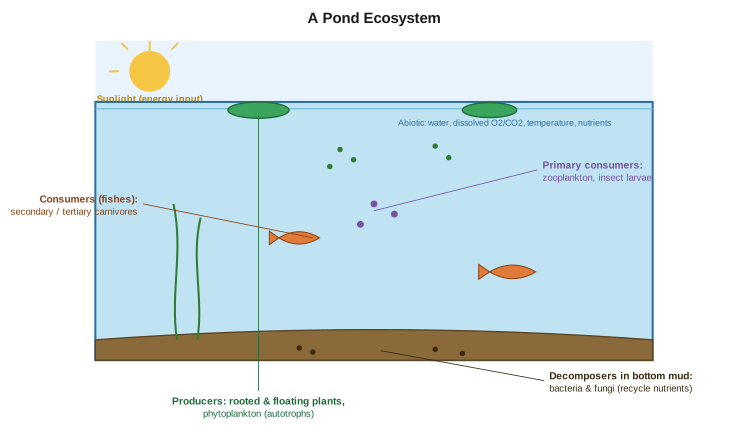
A pond is a small freshwater ecosystem: abiotic factors (water, light, temperature, gases, nutrients) + biotic factors (producers, consumers, decomposers) interacting together.
A pond is one of the best examples of a small, self-sufficient freshwater ecosystem. The diagram (student-drawn) shows a pond with rooted and floating plants, algae/phytoplankton in the water, zooplankton and insects, fishes at different depths, and mud at the bottom with decomposers. Its components are:
A. Abiotic (non-living) factors:
- Water — the medium of life in the pond.
- Light (sunlight) — needed by producers for photosynthesis; penetrates the upper layers.
- Temperature — affects the activity and distribution of organisms.
- Dissolved gases — oxygen (for respiration) and carbon dioxide (for photosynthesis).
- Inorganic and organic nutrients — salts of nitrogen, phosphorus, carbon, etc., in the water and bottom mud, plus dissolved organic matter.
B. Biotic (living) factors:
- Producers (autotrophs): phytoplankton (microscopic algae like diatoms, Spirogyra, Volvox) and larger rooted/floating plants (Hydrilla, Vallisneria, lotus, Lemna). They trap solar energy and make food by photosynthesis.
- Consumers (heterotrophs):
- Primary consumers (herbivores): zooplankton, small crustaceans and insect larvae that feed on producers.
- Secondary consumers (carnivores): small fishes, water insects and frogs that eat the primary consumers. …
Unlock everything free for 14 days
- Full step-by-step solutions
- Concept-first explanations
- Methods, shortcuts & mistakes
- PYQ mapping + timed mock tests
Full access for 14 days. No credit card required.