Biology · Ch 10 — Cell Cycle and Cell Division
Meiosis II
Meiosis II
Meiosis II is the second meiotic division, and it follows meiosis I very closely. It sets in almost at once after cytokinesis of the first division, often even before the chromosomes have had time to fully lengthen. Unlike meiosis I, this second division does not reduce chromosome number and behaves very much like an ordinary mitosis: the sister chromatids of each chromosome are simply pulled apart. There is no round of DNA replication before it begins, so the cell divides using chromosomes that were duplicated back in the S phase.
Prophase II
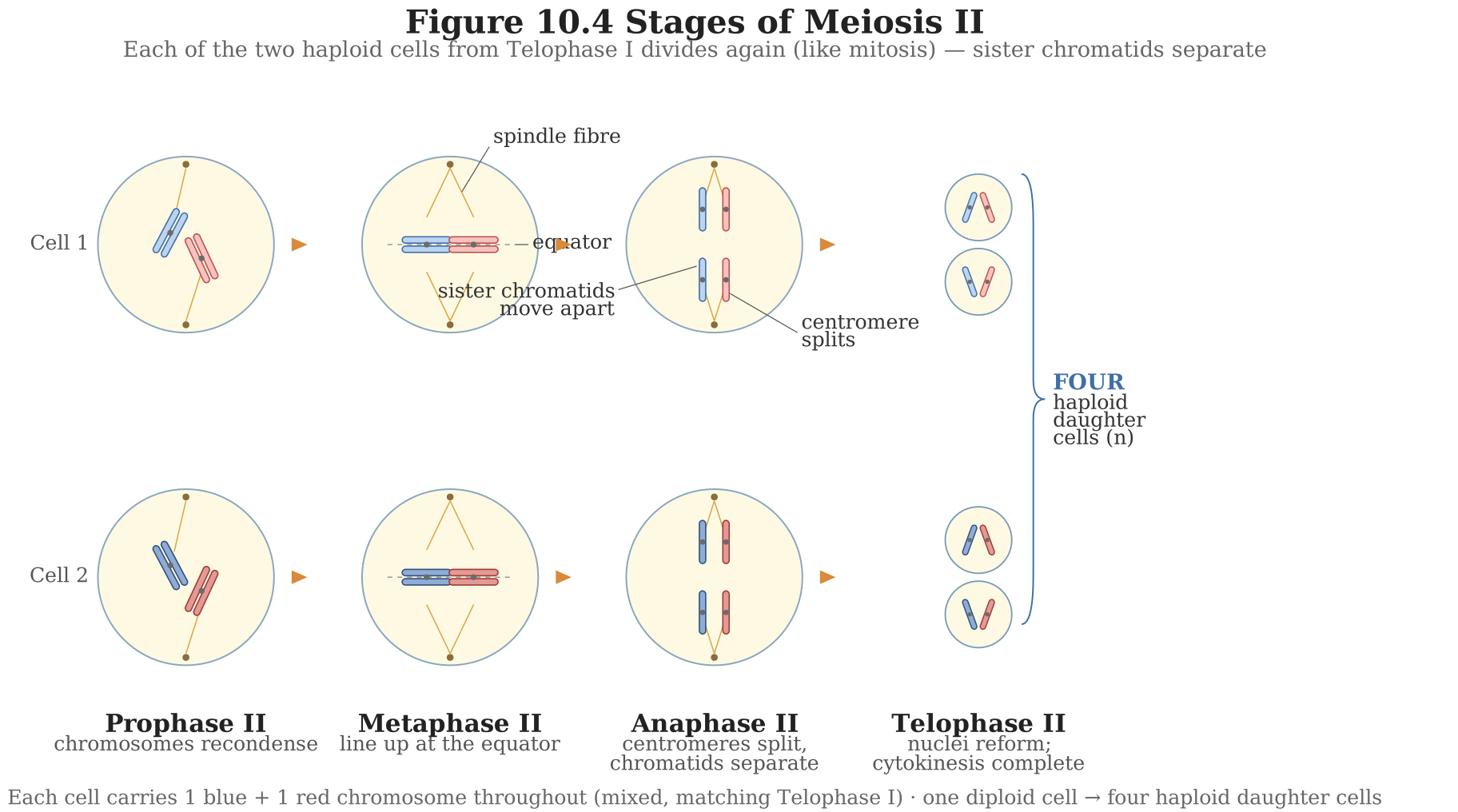
Meiosis II starts immediately after the cytokinesis that ends meiosis I, generally before the chromosomes have fully elongated. In contrast to the elaborate meiosis I, this division closely resembles a normal mitosis. By the end of prophase II the nuclear membrane disappears, and the chromosomes once again become compact and condensed.
Metaphase II
At metaphase II the chromosomes line up along the equator of the cell. Microtubules from the opposite poles of the spindle attach to the kinetochores of the sister chromatids — this time the two chromatids of a single chromosome are gripped by fibres from opposite poles.
Anaphase II
Anaphase II begins with the simultaneous splitting of the centromere of every chromosome. Since it was the centromere that held the sister chromatids together, its division allows the two chromatids to be separated. They are then drawn toward opposite poles of the cell as the microtubules attached to their kinetochores shorten.
Telophase II …
Drawn by us to help you understand the concept clearly, and verified to make sure it's accurate. For exams, practice from your textbook's own diagram.
These panels show meiosis II, which follows meiosis I and closely resembles an ordinary mitosis. Each of the two haploid cells produced by meiosis I divides again. In prophase II the chromosomes condense once more; in metaphase II they line up singly at the equator; in anaphase II the centromeres finally split and the sister chromatids are pulled apart to opposite poles; and in telophase II nuclei re-form. Because both cells from meiosis I go through this second division, the overall outcome of meiosis — meio …