Physical Education · Ch 3 — Yoga as Preventive Measure for Lifestyle Disease
Shavasana
Shavasana
Shavasana (Corpse Pose)
Lying supine on the ground like a corpse is Shavasana. The posture wards off fatigue and brings mental repose. It is a relaxing asana and is very useful in removing the fatigue created by the practice of other asanas, which is why it is usually done at the end of a yoga session. In the CBSE Class 12 Physical Education course it is one of the most important relaxation asanas for managing hypertension.
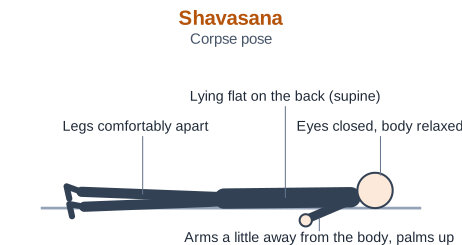
Drawn by us to help you understand the concept clearly, and verified to make sure it's accurate. For exams, practice from your textbook's own diagram.
A line drawing of a person lying flat on the back in complete relaxation, the legs comfortably apart, the arms a little away from the body with the palms facing upward and the …
Technique
- Lie straight on your back with ease.
- Keep a distance of about one and a half feet between the legs.
- Place the hands straight on the ground at a distance of about six inches from your body, palms facing upward, fingers remaining slightly curled and the eyes closed.
- After maintaining it for some time, return to the first position.
Benefits
- Practised soon after other asanas, it removes fatigue.
- Very beneficial in high blood pressure and cardiac diseases.
- Also beneficial for people suffering from neurosis and fear complexes.
Contraindications
- Those who have been forbidden the supine position by their doctors for some reason should not practise it.
Breathing Awareness
- Let the breath settle into its own slow, natural rhythm without any conscious control; Shavasana is the one asana in this unit where the breath is observed rather than directed.
- If the mind wanders, gently bring the attention back to the sensation of the breath moving in and out, without trying to change its pace.
- As relaxation deepens, the breath will naturally slow and become shallower; this is the sign the posture is working, not a cause for concern.
Why Shavasana is central to managing hypertension
Shavasana is, in effect, a long, deliberate practice of total muscular release combined with unforced, natural breathing, the single most direct way yoga addresses the chronic muscular tension and heightened nervous-system activity that keep blood pressure persistently elevated. Unlike every other asana in this unit, it asks for no physical effort at all, which makes it uniquely suited to hypertension: there is no exertion of any kind that could raise blood pressure, only the systematic release of tension from the feet upward to the face.