Q.How will you convert 4-nitrotoluene to 2-bromobenzoic acid?
You're viewing a preview — the full solution, concept, methods & PYQ mapping are locked.
Start your 14-day free trial to unlock the full solution →Brominate first: in 4-nitrotoluene, (ortho/para director) and (meta director) both point the incoming bromine to the same carbon — the position ortho to methyl is the position meta to nitro. That gives 2-bromo-4-nitrotoluene. Then reduce the nitro group, remove the resulting amino group via diazotisation/, and only at the end oxidise to . Final product: 2-bromobenzoic acid.
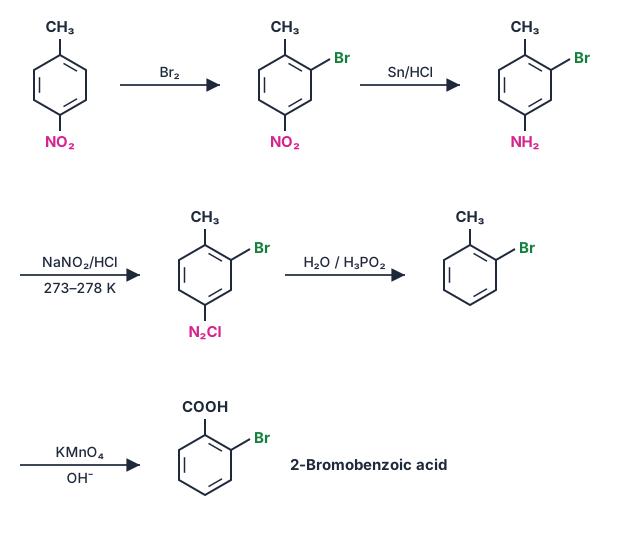
The target, 2-bromobenzoic acid, needs bromine ortho to a carboxylic acid — but is a meta director, so it can never direct bromine to its own ortho position. The insight of the textbook's Solution is that in the starting material the two substituents already present agree on exactly the right position, so the bromination should be done before anything else is changed.
1. Brominate while both original groups are on the ring.
Number the ring with at C-1 and at C-4. The methyl group (ortho/para director) favours C-2/C-6; the nitro group (meta director) favours the positions meta to itself, which are the same C-2/C-6. Both effects reinforce, so bromination gives 2-bromo-4-nitrotoluene cleanly:
2. Reduce the nitro group to an amine.
3. Remove the amino group via the diazonium salt.
Diazotise with at 273–278 K, then treat with (hypophosphorous acid), which replaces by :
4. Oxidise the methyl group last.
…
Unlock everything free for 14 days
- Full step-by-step solutions
- Concept-first explanations
- Methods, shortcuts & mistakes
- PYQ mapping + timed mock tests
Full access for 14 days. No credit card required.