Computer Science · Ch 10 — Computer Networks
Metropolitan Area Network (MAN)
Metropolitan Area Network (MAN)
A Local Area Network (LAN) is limited to a single building or campus. When you need to connect computers across an entire city or a large town, a LAN is no longer sufficient. That is where a Metropolitan Area Network (MAN) comes in.
A MAN is essentially an extended form of a LAN. It covers a much larger geographical area — typically a city or a town. The data transfer rate in a MAN is still measured in Mbps (megabits per second), but it is considerably slower than what you would get on a typical LAN. The maximum distance a MAN can cover is about 30 to 40 kilometres.
The most common real-world examples of a MAN are a cable TV network or a cable-based broadband internet service. These networks run cables across a city to deliver television or internet to thousands of homes and offices.
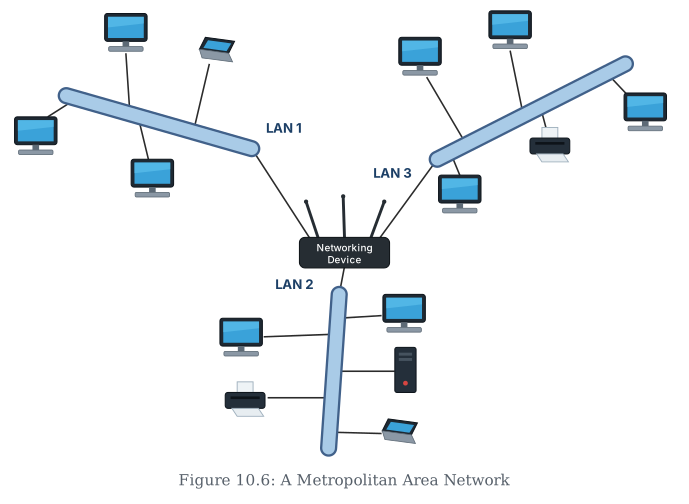
A MAN is often built by connecting several LANs together. For instance, different branches of a bank located in different parts of the same city might each have their own LAN. These LANs can be linked to form a single MAN, allowing the branches to share data and resources.
Think of a MAN as the network that covers a city, while a LAN covers a building, and a WAN covers the country or the world. …
Drawn by us to help you understand the concept clearly, and verified to make sure it's accurate. For exams, practice from your textbook's own diagram.
A Metropolitan Area Network (MAN) is one size up from a LAN — instead of covering a single room or building, it connects several separate LANs across a city or town. Here, three LANs — LAN 1, LAN 2, and LAN 3, each already a small cluster of connected devices — all link into one shared Networking Device that ties the whole city-wide network together. …