Computer Science · Ch 10 — Computer Networks
Star Topology
Star Topology
In a star topology, every device on the network is connected to a single central node. That central node is a networking device — typically a hub or a switch. The name comes from the visual shape: the central device sits at the centre, and each device connects to it like the points of a star.
This design is considered very effective, efficient, and fast. The reason is straightforward: each device has a direct, dedicated connection to the central node. There is no daisy-chaining or dependence on neighbouring devices to relay data.
A major advantage is isolation. If one device fails or its cable is damaged, the rest of the network continues to work normally. The problem stays contained to that single connection. However, this strength comes with a critical weakness: the central node is a single point of failure. If the hub or switch at the centre stops working, the entire network goes down — every device loses connectivity.
The central node can operate in one of two modes:
- Broadcasting device — When the central node is a hub, it sends every incoming data packet to all connected devices. Every device receives the data, even if it was meant for only one of them. …
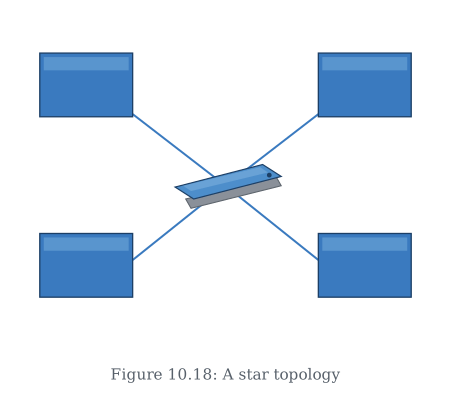
Drawn by us to help you understand the concept clearly, and verified to make sure it's accurate. For exams, practice from your textbook's own diagram.
In a star topology, every node connects individually to ONE central device (a hub or switch) — none of the nodes connect directly to each other. All communication between any two nodes has to pass through that central point first. …