Computer Science · Ch 12 — Security Aspects
Eavesdropping
Eavesdropping
Eavesdropping
The word eavesdropping comes from an old, literal practice: people would secretly listen to conversations happening inside a house by standing under the eaves — the overhanging edges of the roof. That image of hidden listening is exactly what the term means in the digital world, though the "house" is now a network and the "conversation" is data moving between two devices.
Eavesdropping is the unauthorised, real-time interception or monitoring of private communication between two entities over a network. The key word is real-time. Unlike snooping, where network traffic is captured and stored for later analysis, eavesdropping happens as the communication is actually taking place. The attacker listens in live, without the knowledge or consent of either party involved.
The targets are usually private communication channels — phone calls made over VoIP, instant messages, video conferences, fax transmissions, and similar personal exchanges. In the days of conventional telephone lines, this practice was known as wiretapping. Today, the attack surface has grown: digital devices like laptops and cell phones come with built-in microphones and cameras, and these can be hacked and eavesdropped upon using rootkit malware, which hides deep inside the system and gives the attacker ongoing, covert access. …
Drawn by us to help you understand the concept clearly, and verified to make sure it's accurate. For exams, practice from your textbook's own diagram.
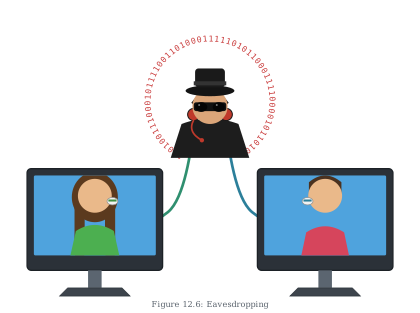
The figure is a stylised illustration of a private conversation being secretly intercepted. Two computer monitors face each other, one on the left and one on the right. The left monitor displays a woman's avatar, drawn with a green top, and the right monitor shows a man's avatar in a red or pink top. Each screen has a phone-style earpiece plugged into its side by a cable, so the two people appear to be talking to each other through their computers — a real-time call.
The two cables run down from the screens and meet in the middle of the image. There, a shadowy figure stands — a spy wearing a hat, sunglasses, and a headset, listening in on the conversation. The spy is enclosed in a circular border made of scattered binary digits, 0s and 1s, which frames the whole scene. The binary ring signals that this is happening in a digital, networked environment, not a physical room.
What the figure teaches is the essence of eavesdropping: a hidden third party secretly intercepting a private, real-time conversation between two entities over a network. The two avatars represent the legitimate participants, the cables represent the communication channel, and the spy at the meeting point represents the attacker who taps into that channel without either participant knowing. The binary border reinforces that the interception happens at the data level, in the digital stream itself. …