Zoology · Ch 9 — Chemical Coordination and Integration
Human Endocrine System
Human Endocrine System
Taken together, the body's hormone-producing structures make up the endocrine system. This system is not a single organ but a collection of parts scattered through the body — both the discrete endocrine glands and diffuse, hormone-secreting tissues and cells found in various locations.
The organised endocrine glands
Some of these hormone sources are distinct, well-defined glands. In humans these organised endocrine bodies are:
- the pituitary
- the pineal
- the thyroid
- the adrenal glands
- the pancreas
- the parathyroid glands
- the thymus
- the gonads — the testis in males and the ovary in females
Other hormone-producing organs
Besides these dedicated glands, several organs whose main job is something else also release hormones. These include the gastrointestinal tract, the liver, the kidney and the heart. Their hormone secretion comes from diffuse tissue rather than from a compact gland, but it is part of the endocrine system all the same. …
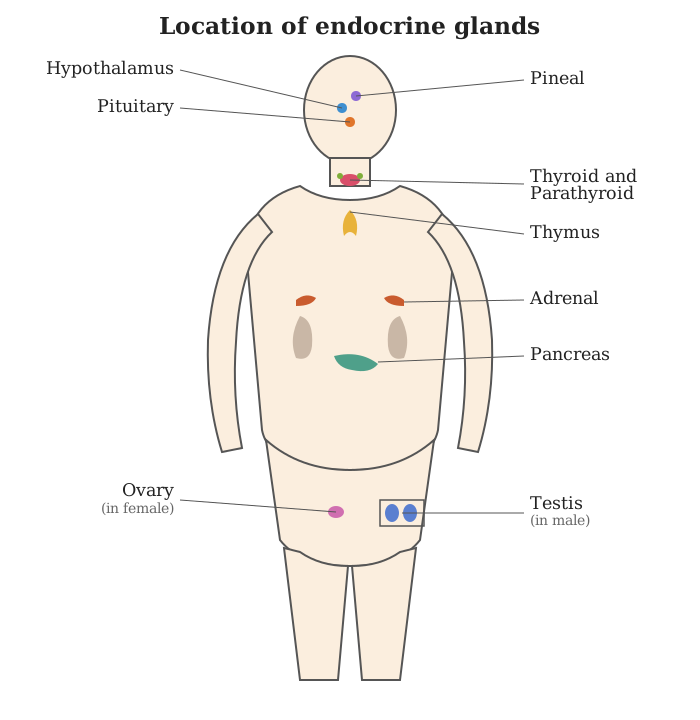
Drawn by us to help you understand the concept clearly, and verified to make sure it's accurate. For exams, practice from your textbook's own diagram.
This figure maps where the body's major endocrine glands lie, from head to pelvis. In and around the brain sit the pineal gland, the hypothalamus and the pituitary gland. In the neck are the thyroid gland and, on its back surface, the parathyroid glands. The thymus lies in the chest behind the breastbone. In the abdomen, one adrenal (suprarenal) gland caps each kidney, and the pancreas lies near the stomach. Lower down are the gonads — the testes in the male and the ovaries in the female. Because these glands are ductless, they are not joined into a single organ but are scattered through the body, each releasing its hormones straight into the blood. Together …