Computer Science · Ch 10 — Computer Networks
Bus Topology
Bus Topology
Bus Topology
In a bus topology, every device on the network is connected to a single, shared communication line. This central cable is called the bus or the backbone. Think of it like a long wire running through a building, with each computer tapping into it.
When a node (any device on the network) sends data, that data travels along the entire length of the bus in both directions. Because the bus is shared, every other node connected to it can see and receive that data. This is a fundamental characteristic — the data is broadcast to all.
The bus itself is a single, continuous cable. This design makes the topology cheaper to set up and easier to maintain than many other layouts, because you only need one main wire to connect all the devices. You do not need separate cables running between each pair of devices.
For comparison, a fully-connected mesh topology with nodes requires separate wires. A bus topology avoids this complexity entirely. …
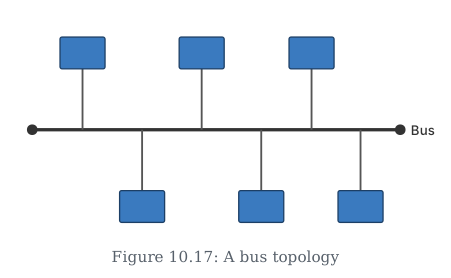
Drawn by us to help you understand the concept clearly, and verified to make sure it's accurate. For exams, practice from your NCERT textbook's own diagram.
In a bus topology, every node connects to ONE shared central cable — the "bus" — rather than to each other directly or to a central device. Data placed on the bus by any node travels the length of the cable and can be picked up by any other node connected to it. …