Geography · Ch 20 — Biodiversity and Conservation
Ecosystem Diversity
Ecosystem Diversity
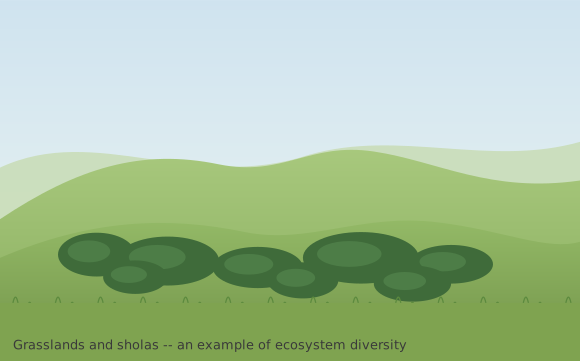
The photograph shows a high-altitude landscape in the Western Ghats, where rolling green hills stretch under a pale, hazy sky. The grassland itself is the dominant feature — an open, undulating expanse of short vegetation that covers the slopes and crests of the terrain. Scattered across this open ground, in the folds and sheltered valleys, sit darker, compact patches of shola forest: dense, stunted evergreen woodland that looks almost like islands of deep green against the lighter grassland.
What makes this image a textbook example of ecosystem diversity is the contrast it captures in a single frame. Two very different ecosystems — the sun-exposed, wind-swept grassland and the shaded, moisture-retaining shola forest — coexist side by side within the same mountain range. The sholas are not random clumps of trees; they grow precisely where the topography offers protection from wind and where water collects, so the valleys hold forest while the exposed ridges stay grassy. This is not a uniform habitat but a mosaic, and the mosaic itself is the point. …
Ecosystem diversity is the broadest level of biodiversity — it looks beyond individual species and considers the variety of ecosystems themselves. If genetic diversity is about variation within a species, and species diversity is about the number of species in a region, ecosystem diversity is about the range of habitats, communities, and ecological processes that exist across the earth. It is the variety of forests, grasslands, deserts, wetlands, rivers, and oceans, each with its own set of interacting organisms and environmental conditions.
The book presents ecosystem diversity as the third and most comprehensive level of biodiversity, following genetic and species diversity. It captures the differences not just in what lives where, but in how entire systems function — the flow of energy, the cycling of nutrients, and the relationships between living and non-living components.
A key point the book makes is that ecosystem diversity is not uniform across the globe. Different regions support different kinds of ecosystems, and this variation is driven by climate, soil, altitude, and other physical factors. For instance, a tropical rainforest and a cold desert differ not only in the species they host but in the very structure and dynamics of the ecosystem itself — the canopy layers, the water availability, the seasonal rhythms, and the types of interactions among organisms.
The book also emphasises that ecosystem diversity operates at multiple scales. It can refer to the variety of ecosystems within a single country or region, or it can be viewed globally, comparing the major biomes of the world. This scale matters because conservation planning often needs to protect not just individual species but entire habitats and the ecological processes that sustain them.
Another important idea is that ecosystem diversity is closely tied to the other two levels of biodiversity. A region with high ecosystem diversity generally supports high species diversity, because different habitats provide different niches and resources. Conversely, the loss of an ecosystem — say, the draining of a wetland — removes not just one habitat but every species that depended on it, along with the services that ecosystem provided, such as water purification or flood control. …
You have studied about the ecosystem in the earlier chapter. The broad differences between ecosystem types and the diversity of habitats and ecological processes occurring within each ecosystem type constitute the ecosystem diversity. The 'boundaries' of communities (associations of species) and ecosystems are not very rigidly defined. Thus, the …