Psychology · Ch 2 — Methods of Enquiry in Psychology
Steps in Conducting Scientific Research
Steps in Conducting Scientific Research
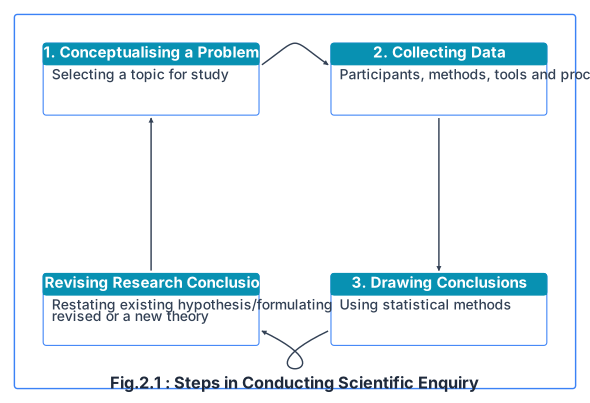
What sets scientific enquiry apart is not the topic it studies but the manner in which it studies it - in an objective, systematic and testable way. Objectivity means that if two independent researchers study the same event, their conclusions should largely agree, in the same way that two people measuring the same table with the same instrument would arrive at the same length. Systematic procedure means the research follows a defined sequence of steps, usually pictured as a repeating cycle of four stages (see Fig.
Drawn by us to help you understand the concept clearly, and verified to make sure it's accurate. For exams, practice from your NCERT textbook's own diagram.
Fig.2.1: Steps in Conducting Scientific Enquiry — a four-box cycle: (1) Conceptualising a Problem, (2) Collecting Data, (3) Drawing Conclusions, (4) Revising Research Conclusions, looping back to (1). Own-illustrated for this platform from the real NCERT page's own facts (composition, labels, and layout are recreated; the specific artisti …
2.1). First, conceptualising a problem: the researcher chooses a broad theme, narrows it into a specific, researchable question, often based on earlier research, personal observation or experience, and then frames a hypothesis, a tentative, testable answer to that question. Second, collecting data: this means designing the actual study, which requires deciding who the participants will be, which method of data collection to use (observation, experiment, correlational study, case study, and so on), which tools are needed to gather the information (such as an interview schedule, observation schedule or questionnaire), and exactly how those tools will be administered. Third, drawing conclusions: the collected data is analysed using statistical tools, from simple graphical summaries such as pie charts and bar diagrams to more advanced statistical techniques, so the researcher can see whether the hypothesis is supported. Fourth, revising research conclusions: if the data confirm the hypothesis, the existing theory is strengthened; if not, the researcher revises the hypothesis or proposes an alternative one, which is then tested again with fresh data, meaning scientific research is never really 'finished …