Biology · Ch 5 — Morphology of Flowering Plants
The Fruit
The Fruit
The fruit is a characteristic feature of the flowering plants. It is a mature or ripened ovary, and it develops only after fertilisation of the flower. Occasionally, a fruit may be formed without fertilisation of the ovary; such a fruit is called a parthenocarpic fruit.
Generally, the fruit consists of two parts:
- a wall or pericarp, and
- the seeds.
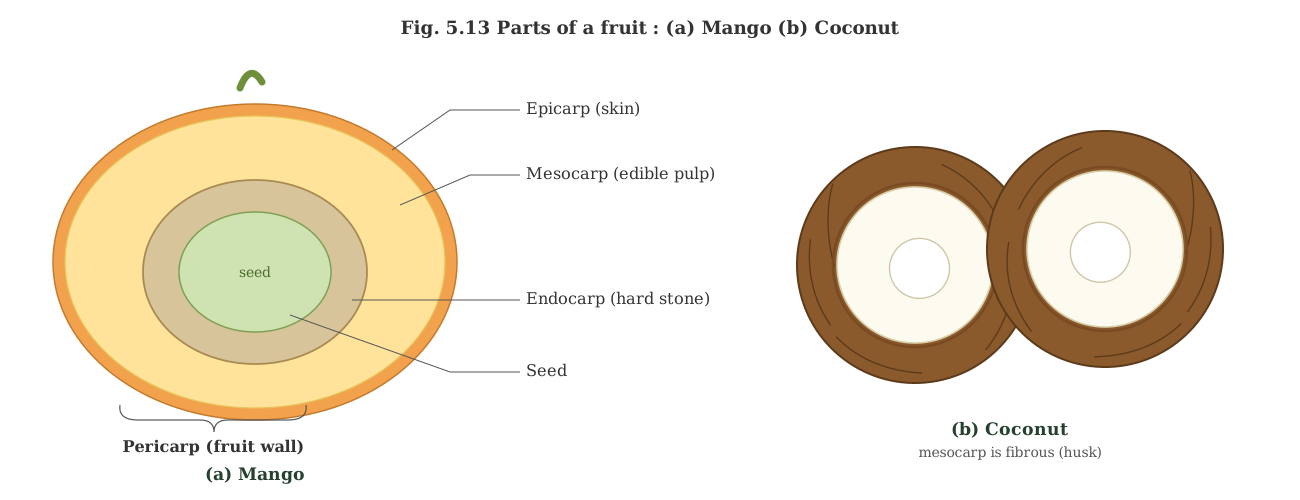
The pericarp may be dry or fleshy. When the pericarp is thick and fleshy, it becomes differentiated into three distinct layers:
- the outer epicarp,
- the middle mesocarp, and
- the inner endocarp. …
Drawn by us to help you understand the concept clearly, and verified to make sure it's accurate. For exams, practice from your NCERT textbook's own diagram.
This figure shows how a fruit develops from the ripened ovary wall, called the pericarp, which often separates into three layers around the seed: an outer epicarp, a middle mesocarp and an inner endocarp. In the mango, a drupe, the epicarp is the thin skin, the mesocarp is the thick juicy pulp we eat, and the endocarp is the hard stone that surrounds the single seed. In the coconut, also a drupe, the epicarp is the smooth outer rind, the mesocarp is the thick fibrous husk, and the endocarp is the very hard stony shell that encloses the se …