Q.Fill in the blank: Apple is an example of ______ fruit.
🔒You're viewing a preview — the full solution, concept, methods & PYQ mapping are locked.
🔒 Start your 14-day free trial to unlock the full solution →Concept understanding — The Fruit
A fruit normally develops from the ovary after fertilisation (a true fruit, e.g. Mango); if it develops from the ovary without fertilisation, it is a parthenocarpic fruit (seedless Banana, seedless Grapes). A fruit that develops from floral parts other than the ovary is a false fruit or pseudocarp (Apple). A true fruit's protective wall, the pericarp, is divided in fleshy fruits into an outer epicarp, middle mesocarp and inner endocarp (Mango). Fruits from a single ovary of a single flower are simple fruits, further split into dry fruits (thin pericarp — dehiscent, e.g. Capsule/Ladies finger, Legume/Pea; or indehiscent, e.g. Achene/Mirabilis, Caryopsis/Maize, Cypsela/Sunflower) and fleshy fruits (thick pericarp — Berry/Tomato with a soft pericarp, Drupe/Coconut with a stony endocarp). Frui …
Because the fleshy part we eat in apple develops mainly from the receptacle rather than the ovary itself, this kind of fruit is given its own classification distinct from a true fruit. …
A false fruit (pseudocarp) develops from a floral part other than the ovary; in apple the edible flesh comes from the thalamus.
In most flowering plants only the ovary develops into the fruit after fertilisation — such fruits are true fruits (e.g., mango, tomato). In apple, the fleshy part we eat is derived from the thalamus (receptacle) of the flower, which enlarges and encloses the true fruit — the small, papery, five-chambered core holding the seeds, which is the actually ripened ovary. Because a floral part other …
- CBSE 2025Set A1 markQ.Answer in one word / sentence: Which part of the flower forms the fruit?
›Reveal solutionSolution
The ovary of the flower matures into the fruit after fertilisation.
Following double fertilisation in a flowering plant, the zygote develops into the embryo and the ovules develop into seeds. Simultaneously, the ovary wall (pericarp) enlarges and matures to become the fruit, which encloses and protects the developing seed(s). In many species this …
- CBSE 2025Set ANNUAL1 markMCQQ.An example of a false fruit is -(a) Mango(b) Apple(c) Kiwi(d) Watermelon
›Reveal solutionSolution
A false fruit (pseudocarp) develops from a floral part other than the ovary; Apple is the classic example.
A true fruit develops only from the fertilised ovary after the other floral parts wither and fall off — Mango, Kiwi and Watermelon are all true fruits formed this way. In Apple, however, the fleshy edible part is formed mainly by the thalamus (receptacle) of the flower, which grows and swells around the true fr …
- CBSE 2024Set ANNUAL1 markQ.Distinguish between true fruits and false fruits by giving one point.
›Reveal solutionSolution
True fruits arise solely from the ovary; false (pseudo) fruits form from other floral parts, usually the thalamus, in addition to the ovary.
After fertilisation, the ovary generally develops into the fruit while the ovules become the seeds. When the fruit develops exclusively from the fertilised ovary, it is called a true fruit (e.g., mango, tomato). In some plants, other parts of the flower — most commonly the thalamus (receptacle) — also enlarge along with the ovary to form the fruit; such fruits are called false fruits (pseudocarps), e.g., apple and cashew, wher …
- CBSE 2023Set A1 markQ.Fill in the blank: Apple is an example of ______ fruit.
›Reveal solutionSolution
A false fruit (pseudocarp) develops from a floral part other than the ovary; in apple the edible flesh comes from the thalamus.
In most flowering plants only the ovary develops into the fruit after fertilisation — such fruits are true fruits (e.g., mango, tomato). In apple, the fleshy part we eat is derived from the thalamus (receptacle) of the flower, which enlarges and encloses the true fruit — the small, papery, five-chambered core holding the seeds, which is the actually ripened ovary. Because a floral part other …
- CBSE 2023Set ANNUAL1 markMCQQ.Which of the following is an example of false fruit?(a) Mango(b) Apple(c) Tomato(d) Kiwi
›Reveal solutionSolution
A true fruit develops solely from the fertilised ovary; a false (pseudo-) fruit develops mainly from some other floral part, like the thalamus in apple.
After fertilisation, the ovary normally develops into the fruit (a 'true fruit'), with the ovary wall becoming the pericarp. In some plants, however, other floral parts also contribute substantially to the mature fruit — in apple, the fleshy, edible part we eat develops from the swollen thalamus (receptacle), with the true ovar …
- CBSE 2022Set GO1 markMCQQ.Which one of the following is not a false fruit?(a) Apple(b) Strawberry(c) Walnut(d) Mango
›Reveal solutionSolution
Mango is the only true fruit here; apple, strawberry and walnut are false fruits.
Concept — true vs false fruit. After fertilisation the ovary ripens into a fruit and its wall becomes the pericarp. When the fruit develops exclusively from the ovary, it is a true (genuine) fruit. When floral parts other than the ovary — the thalamus/receptacle, calyx or bracts — grow along with the ovary and form the fleshy edible portion, the fruit is a false (spurious) fruit.
Why each option is what it is:
- Apple — the juicy edible flesh is the swollen thalamus; the true fruit (core) lies inside → false fruit.
- Strawberry — the fleshy red part is the enlarged thalamus bearing achenes on its surface → false fruit. …
- CBSE 2021Set D1 markMCQQ.Thalamus is edible part in which of the following ?(a) Annona(b) Apple(c) Orange(d) All of these
›Reveal solutionSolution
The edible fleshy part of apple is the thalamus.
In most true fruits the edible flesh develops from the ovary wall (pericarp). In apple, however, the succulent edible portion develops from the thalamus (the swollen receptacle) that grows around the ovary; the real fruit lies at the core. Because a part other than the …
- CBSE 2021Set ANNUAL1 markQ.Fill in the blank: The edible portion of apple is fleshy ___.
›Reveal solutionSolution
Apple is a false fruit (pome) — the part we eat develops from the thalamus, not the ovary.
In most fruits the fleshy edible part develops from the ovary wall (pericarp). Apple, however, is a false fruit (pome): after fertilisation, it is the thalamus (receptacle) that swells and becomes fleshy and edible, while the true fruit (form …
- CBSE 2020Set WK1 markQ.Write only two characteristic features of a fleshy fruit and draw the labelled diagram of a vertical section of a mango fruit.
›Reveal solutionSolution
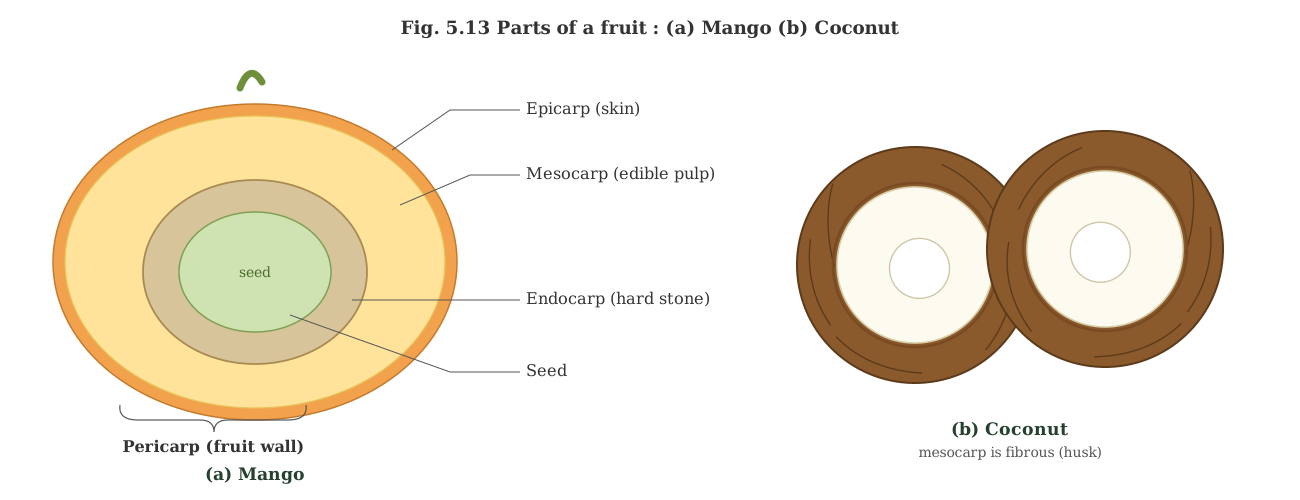
Figure — The stem hard-requires a labelled vertical section of a mango fruit; catalog fig-5-13 'Parts of a fruit: (a) M A fleshy fruit has a thick, juicy, edible pericarp and stays closed; a mango is a drupe with epicarp, mesocarp and stony endocarp.
Two characteristic features of a fleshy fruit.
- The pericarp (fruit wall) is thick, soft, fleshy and juicy, storing water and food.
- It is usually edible and indehiscent (it does not split open on its own to shed seeds; the seeds are dispersed when the fruit is eaten or decays).
Labelled diagram — vertical section (V.S.) of a mango (a drupe). (Draw an oval fruit cut lengthwise and label the layers from outside to inside.)
- Epicarp — the thin outer skin. …
- CBSE 2018Set ANNUAL1 markMCQQ.The edible part of Apple is.(a) Endocarp(b) Mesocarp(c) Endosperm(d) Thalamus
›Reveal solutionSolution
Apple is classed as a pome/false fruit because its fleshy, edible portion develops from the thalamus (floral receptacle) surrounding the ovary, rather than from the ovary wall itself.
In a true fruit, the fruit wall (pericarp) develops from the ovary wall after fertilisation. In apple (and pear), however, the thalamus (receptacle) grows and becomes fleshy, enveloping the true fruit (the core, which develops from the ovary and contains the seeds). Since the sweet, fleshy part we eat comes from this thalamus rather than the ovary, apple is called a false fruit or pome. (Endocarp is the …
- CBSE 2018Set ANNUAL1 markQ.Draw a neat diagram of L.S. of apple.
›Reveal solutionSolution
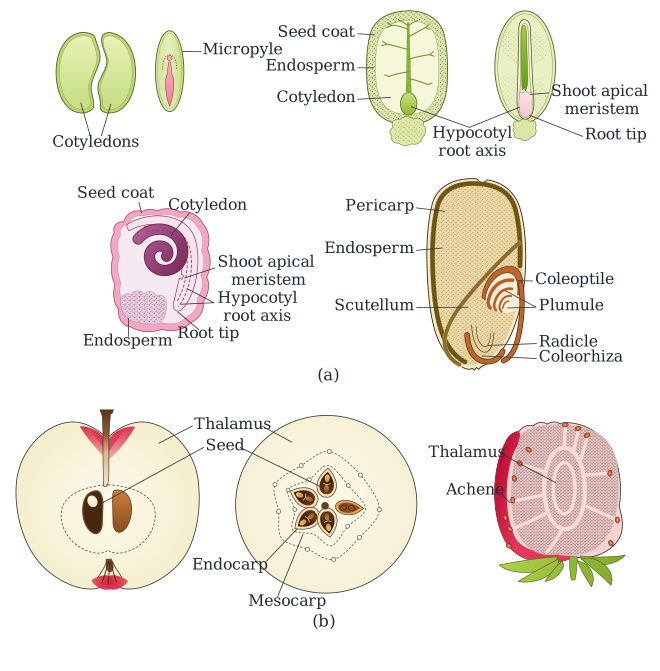
Figure — A hard draw-gate asking for the L.S. of apple; catalog figure 1-15 explicitly shows the false fruit of apple i Apple is called a false fruit (pome) because most of its edible flesh develops from the thalamus (receptacle), not from the ovary — the true fruit is only the small five-chambered core in the centre.
(This is a 'draw a neat diagram' question; the structure is described below in the order it would be labelled.)
Longitudinal section (L.S.) of an apple, from outside in:
- Pedicel (stalk) at the base, attaching the fruit to the branch.
- Remnants of the calyx (sepals) persisting at the opposite (distal) end.
- Thalamus (receptacle) — the large, fleshy, edible portion of the apple; it grows and swells enormously after fertilisation, forming most of the fruit's bulk. This is the 'false fruit' tissue.
- Core (true fruit) — a small central region, clearly distinct from the surrounding flesh, formed from the ripened ovary. It typically has 5 carpels (chambers), each containing 1–2 seeds. …
- CBSE 2017Set ANNUAL1 markQ.The thick protective covering of the fruit is known as ________.
›Reveal solutionSolution
After fertilisation the ovary wall develops into the fruit wall, called the pericarp, which thickens and protects the seed(s) within.
Following double fertilisation, the ovary of the flower develops into the fruit, while the ovary wall develops into the fruit wall known as the pericarp. The pericarp may become thick and hard (as in a nut), fleshy and edible (as in a drupe or berry), or dry and papery (as in some dehiscent fruits), but in every case it forms the outer protective covering that encloses and protects the seed( …
🎓Unlock everything free for 14 days
- ✓Full step-by-step solutions
- ✓Concept-first explanations
- ✓Methods, shortcuts & mistakes
- ✓PYQ mapping + timed mock tests
Full access for 14 days. No credit card required.