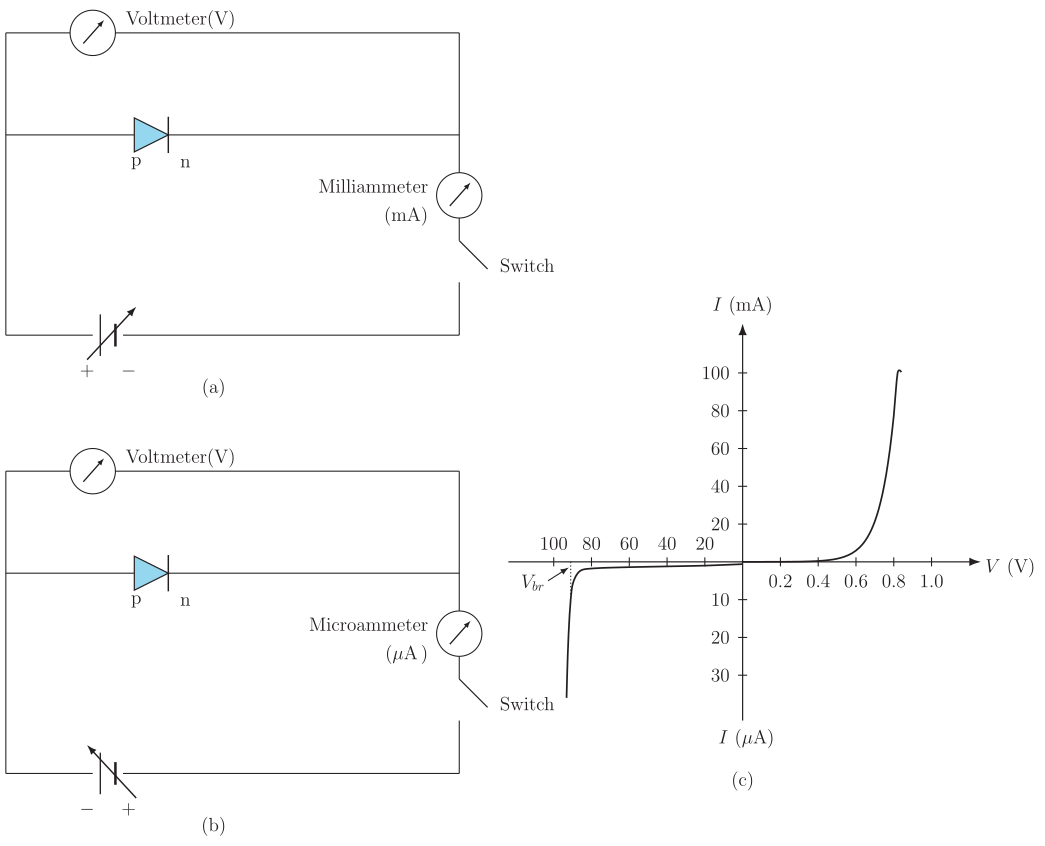
Q.Explain the I-V characteristic of a forward biased junction diode.
You're viewing a preview — the full solution, concept, methods & PYQ mapping are locked.
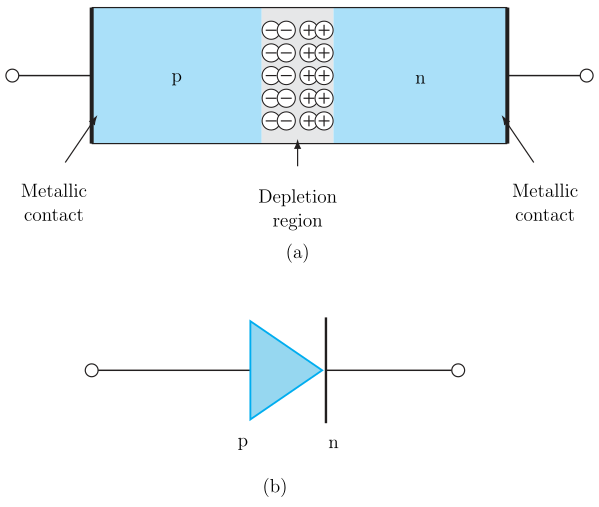
Start your 14-day free trial to unlock the full solution →When a diode is forward biased, the applied external voltage works against the junction's own built-in potential barrier. For SMALL applied voltages, most of that voltage is simply being 'used up' overcoming the barrier, so very few carriers are actually able to cross the junction, and the current recorded is very small -- the I-V curve stays close to the horizontal (voltage) axis over this initial range.
As the applied voltage is increased further, it eventually becomes large enough to substantially reduce the barrier's effective height; once that happens, majority carriers on both sides (electrons in the n-region, holes in the p-region) can cross the junction much more freely, and the current begins to rise SHARPLY with only a small further increase in voltage. The specific point on the curve where this sharp rise begins is called the KNEE POINT, and the voltage at which it occurs is the KNEE VOLTAGE -- about 0.7 V for a silicon diode and about 0.3 V for a germanium diode. …
Unlock everything free for 14 days
- Full step-by-step solutions
- Concept-first explanations
- Methods, shortcuts & mistakes
- PYQ mapping + timed mock tests
Full access for 14 days. No credit card required.