Chemistry · Ch 7 — Elements of Groups 16, 17 and 18
Allotropy
Allotropy
Elements of group 16 exhibit allotropy — the existence of an element in two or more forms in the same physical state. Oxygen has two allotropes, and (ozone). Sulfur exists in a number of allotropic forms; rhombic and monoclinic sulfur are the important allotropes of sulfur, and both are non-metallic.
- Selenium exists in two allotropic forms: red (non-metallic) and grey (metallic).
- Tellurium exists in two allotropic forms, (i) crystalline and (ii) amorphous.
- Polonium reveals two allotropic forms, and (both metallic).
Do you know ? The grey selenium allotrope of Se is a photoconductor, used in photocells. …
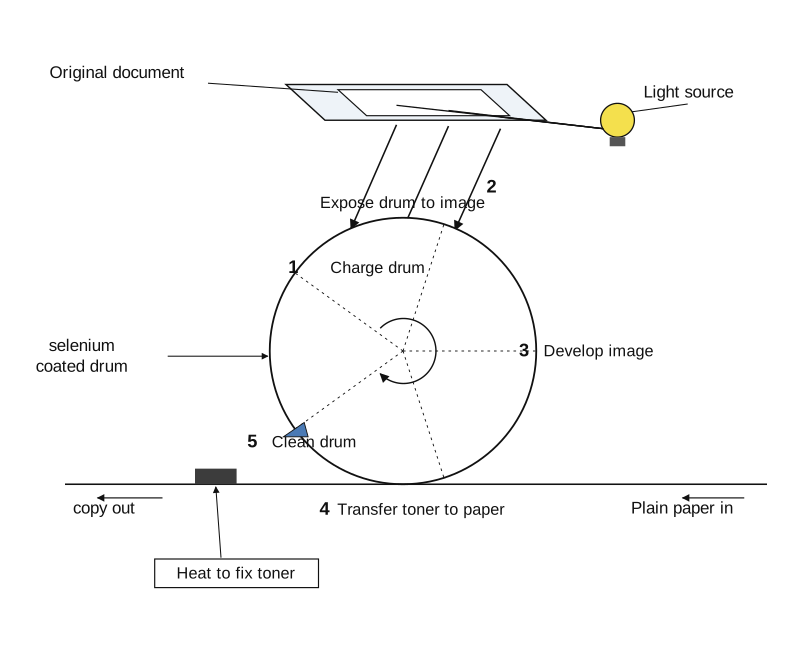
Drawn by us to help you understand the concept clearly, and verified to make sure it's accurate. For exams, practice from your textbook's own diagram.
What this drawing shows (the book prints it inside the "Do you know ?" box, without a figure number). The large circle is the selenium coated drum. Follow the numbered steps around it: 1 Charge drum - the drum gets a uniform positive charge; 2 Expose drum to image - light from the Light source projects the Original document onto the drum; 3 Develop image - negatively charged toner sticks to the charged image areas; 4 Transfer toner to paper - the image passes onto the sheet (Plain paper in); the paper then runs over the Heat to fix toner block and leaves as copy out, while 5 Clean drum readies the drum for the nex …