Q.Draw a neat diagram of L.S. of a monocotyledonous seed (maize) and label scutellum.
You're viewing a preview — the full solution, concept, methods & PYQ mapping are locked.
Start your 14-day free trial to unlock the full solution →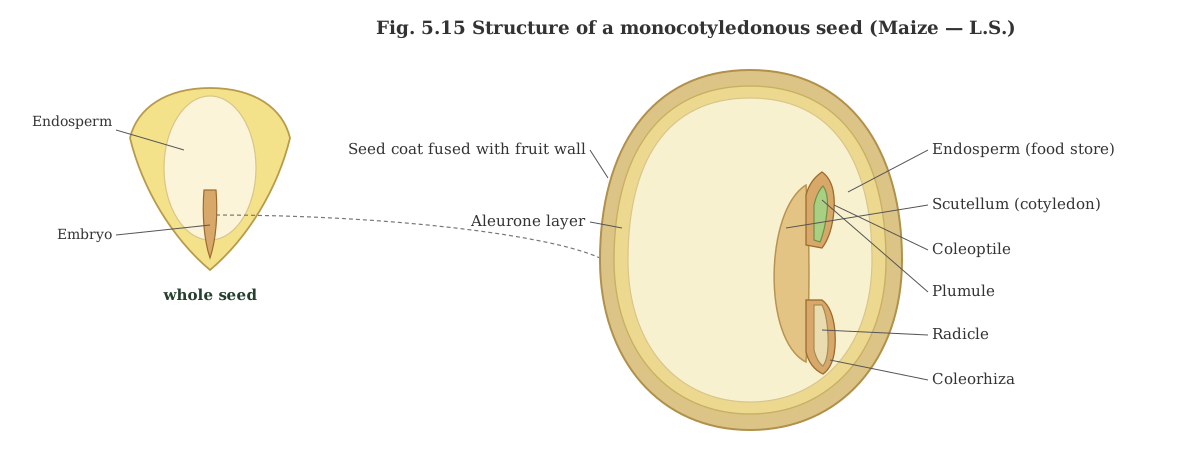
A written description of the maize seed's L.S. structure is given here (since a drawing cannot be rendered as text) so the labelled diagram, with the scutellum correctly placed, can be sketched by hand.
A text answer cannot physically draw the diagram for you, but here is the exact structure to sketch and label so the scutellum is placed correctly. Cover the whole seed with a thin, fused seed coat and pericarp (in maize/monocot grains these two layers are fused together and not separately distinguishable). Inside, the endosperm occupies the bulk of the seed and is divided into two regions: the outer aleurone layer (a proteinaceous layer just under the seed coat) and the large starchy endosperm that fills most of the interior, storing food. The embryo lies embedded to one side of the endosperm and consists of an embryonal axis with two ends: at one end is the plumule (future shoot), enclosed and protected by a sheath called the coleoptile; at the other end is the radicle (future root), enclosed and protected by a sheath called the coleorhiza. Attached to the embryonal axis, and lying between it and the endosperm (pressed flat against the endosperm), is the single, large, shield-shaped cotyledon unique to grasses, called the scutellum — this is the structure that should be labelled directly agai …
Unlock everything free for 14 days
- Full step-by-step solutions
- Concept-first explanations
- Methods, shortcuts & mistakes
- PYQ mapping + timed mock tests
Full access for 14 days. No credit card required.