Biology · Ch 4 — Animal Kingdom
Diploblastic and Triploblastic Organisation
Diploblastic and Triploblastic Organisation
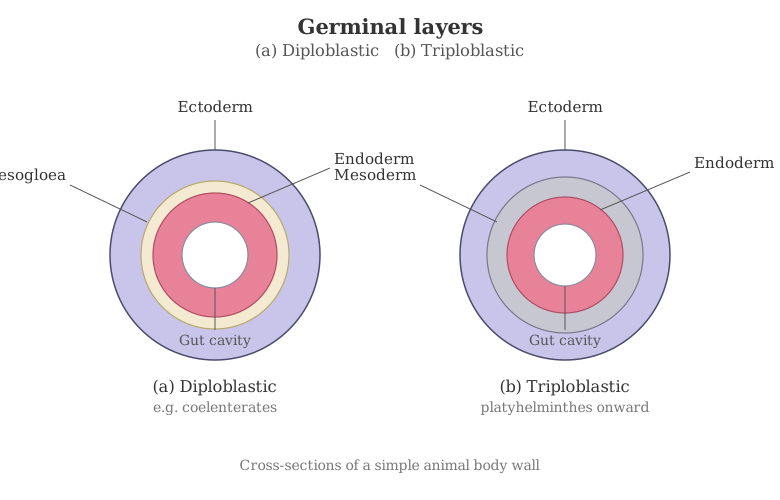
Another fundamental character used in classification is the number of germ layers — the embryonic cell layers from which the whole body develops. On this basis animals are either diploblastic or triploblastic.
Diploblastic animals build their bodies from two embryonic layers: an outer layer called the ectoderm and an inner layer called the endoderm. Between these two layers lies an undifferentiated, non-cellular jelly-like layer called the mesoglea. The mesoglea is not a true germ layer and its cells are not organised into tissues; it simply fills the space between the ectoderm and endoderm. Coelenterates are the typical example of diploblastic animals. …
Drawn by us to help you understand the concept clearly, and verified to make sure it's accurate. For exams, practice from your textbook's own diagram.
This pair of sections compares how many cell layers form an animal's body during early development. In the diploblastic plan, the body wall has just two layers: an outer ectoderm and an inner endoderm, with a jelly-like non-cellular mesogloea packed between them. Coelenterates are built this way. In the triploblastic plan, a third true cellular layer, the mesoderm, develops between the ectoderm and endoderm. This mesoderm gives rise to muscles, blood, bone and many internal organs, allowing a far more complex body. All animals from the flatworms (Platyhelminthes) o …