Chemistry · Ch 6 — Haloalkanes and Haloarenes
p,p'-Dichlorodiphenyltrichloroethane (DDT)
p,p'-Dichlorodiphenyltrichloroethane (DDT)
Structure
DDT, short for p,p'-dichlorodiphenyltrichloroethane, has the structure
— a central carbon carrying an H atom and a group, linked to two benzene rings that each carry a chlorine atom at the para position.
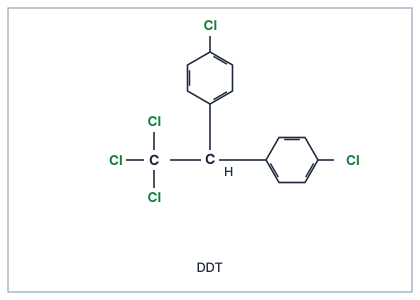
Drawn by us to help you understand the concept clearly, and verified to make sure it's accurate. For exams, practice from your textbook's own diagram.
-Dichlorodiphenyltrichloroethane: a central carbon bears a group and is linked to two separate benzene rings, each carrying a chlorine atom at the position directly opposite (para to) the ring's …
Discovery and use as an insecticide
DDT was first prepared in 1873, but its value as an insecticide was not recognised until 1939, when Paul Muller of Geigy Pharmaceuticals in Switzerland discovered its effectiveness. Muller was awarded the Nobel Prize in Medicine and Physiology in 1948 for this discovery, and it is described as the first of the chlorinated organic insecticides.
DDT's use grew enormously worldwide after World War II, mainly because it was so effective against the mosquito that spreads malaria and the lice that carry typhus.
Problems with extensive use
Problems linked to DDT's heavy use began to surface in the late 1940s:
- Many insect species developed resistance to DDT.
- DDT was also found to be highly toxic to fish. …