Biology · Ch 3 — Plant Kingdom
Angiosperms
Angiosperms
Angiosperms, commonly called the flowering plants, differ from gymnosperms in a fundamental way. In gymnosperms the ovules lie naked, but in angiosperms both the pollen grains and the ovules are produced inside a specialised reproductive structure — the flower. Just as importantly, after fertilisation the seeds of angiosperms are not left exposed; they are enclosed within fruits. So the flower and the fruit-enclosed seed together mark this group out from every other plant division.
A vast and varied group
Angiosperms form an exceptionally large group of plants and occupy an enormous range of habitats. They also span an extraordinary range of sizes: at one extreme is Wolffia, the smallest flowering plant, and at the other are the towering Eucalyptus trees, which can rise to well over a hundred metres. This diversity in form and habitat is one reason the flowering plants are so widespread.
Value to humans
Angiosperms are of immense economic and everyday importance. They supply food, fodder for animals, fuel, medicines, and many other commercially valuable products, which is part of why they matter so much to human life.
Two classes
Based on their structure, the angiosperms are separated into two classes:
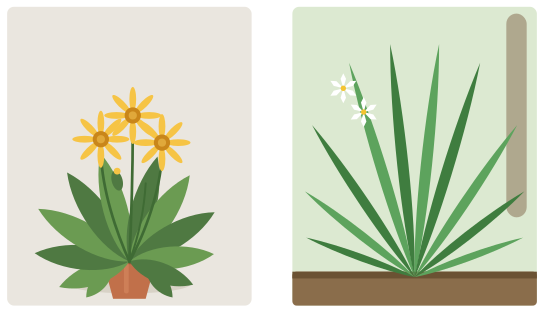
- Dicotyledons — the plants illustrated as a typical dicot.
- Monocotyledons — the plants illustrated as a typical monocot.
These two classes represent the two main lines into which all flowering plants are grouped. …
Drawn by us to help you understand the concept clearly, and verified to make sure it's accurate. For exams, practice from your NCERT textbook's own diagram.
This figure contrasts the two classes of flowering plants (angiosperms) with a photograph of a representative whole plant from each. (a) shows the habit of a typical dicotyledonous flowering plant — a broad-leaved plant of the kind commonly seen in gardens.
(b) shows the habit of a typical monocotyledonous flowering plant — a grass- or lily-like plant with narrow, elongated leaves. Both images are plain whole-plant photographs; they do not show a seed in cross-section or the plant's root system, so the classic dicot-versus-monocot differences in cotyledon number, root type and leaf venation a …