Physical Education · Ch 2 — Children and Women in Sports
Common Postural Deformities
Common Postural Deformities
There are a number of postural deformities. The ones prescribed by the syllabus are given below, each along with its corrective measures. Corrective exercises for any deformity should always be done under the advice and supervision of a physician or a physiotherapist.
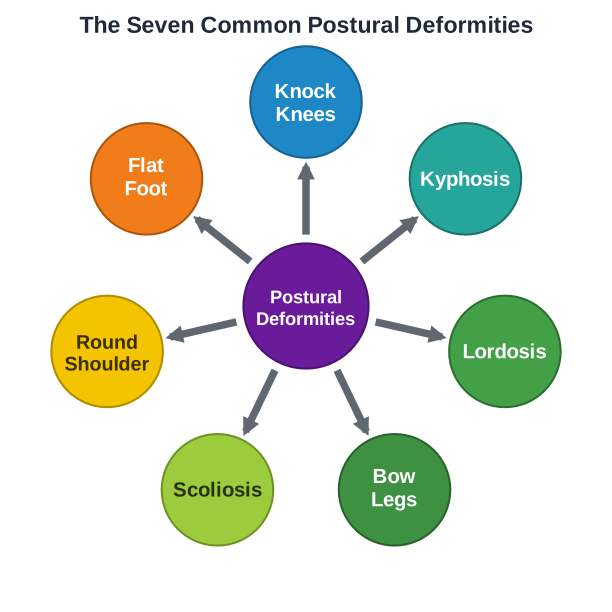
Drawn by us to help you understand the concept clearly, and verified to make sure it's accurate. For exams, practice from your NCERT textbook's own diagram.
A radial 'sun' diagram. A central sphere labelled 'Postural Deformities' sits in the middle, with seven coloured spheres arranged around it, each joined to the centre by a short curved arrow pointing outward. The seven spheres name the deformities: Knock Knees, Kyphosis, Lordosis, …
The Seven Common Postural Deformities
The CBSE Class 12 Physical Education syllabus covers seven common postural deformities. In the order the textbook presents them, they are:
- Knock Knees (Genu Valgum)
- Flat Foot (Pes Planus)
- Round Shoulders
- Kyphosis (hunch back)
- Lordosis (sway back)
- Scoliosis
- Bow Legs (Genu Varum)
Each of these is treated in full in the sections that follow.
Classification
These seven deformities fall into two broad groups:
- Deformities of the spine - Round Shoulders, Kyphosis, Lordosis and Scoliosis.
- Deformities of the legs and feet - Knock Knees, Bow Legs and Flat Foot.
General Causes
Postural deformities seldom arise from one cause alone. They develop from a combination of factors acting over time: malnutrition - especially a deficiency of calcium, vitamin D and protein - which weakens bones and muscles; obesity, which overloads the joints of the legs and feet; carrying heavy loads, particularly a school bag slung on one shoulder, which pulls the body out of alignment; poor sitting and standing habits, which become permanent if repeated daily; ill-fitting furniture and footwear, which force the body into awkward positions; disease (rickets, tuberculosis of the spine, polio); and accidents that leave bones or joints misaligned after healing.