Physical Education · Ch 3 — Yoga as Preventive Measure for Lifestyle Disease
Mandukasana
3.2.9
Mandukasana
Mandukasana comes from the Sanskrit word manduk, meaning frog. The asana is aptly named the frog pose because the body resembles a frog when the posture is held. It is fairly straightforward and can be practised by people of almost all age groups.
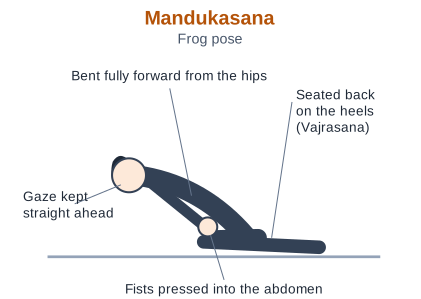
Figure 3.14Line drawing of a person kneeling in Vajrasana and bending forward with fists pressed into the belly, gaze forward - Mandukasana (frog pose).
Drawn by us to help you understand the concept clearly, and verified to make sure it's accurate. For exams, practice from your NCERT textbook's own diagram.
A side-profile line drawing of a person seated in the kneeling Vajrasana position, bent forward from the hips. Both fists are pressed into the abdomen beside the navel and the head faces forward - …
Technique
- Sit in Vajrasana and make fists with both hands, keeping the thumbs inside.
- Place the fists on the belly, next to the navel.
- Bend forward while exhaling.
- Keep looking straight ahead.
- Hold the breath in the posture for a few seconds, then come up while inhaling.
- Repeat the asana 3-4 times.
Breath Awareness
- Inhale deeply.
- Exhale slowly and completely once the forehead touches the floor.
- Slowly inhale as you look up to release from the position, expanding the neck forward and then backward along with the entire back.
- Come back completely while exhaling and sit in Vajrasana again.
Benefits
- Is beneficial to all the organs of the body.
- Gives relief from diabetes, digestive disorders and constipation.
- Improves the flexibility and mobility of the knee and ankle joints.
- Helps tone the muscles of the shoulders and abdomen.
- Increases lung capacity with regular practice.
- Is beneficial for people suffering from problems of the pancreas and the heart - which is why it is especially valued for diabetes.
- Helps reduce fat from the thighs, belly and hips.
Contraindications
- People suffering from severe back pain must avoid this asana.
- Those who have recently undergone abdominal surgery should not attempt it.
- Pregnant women are not advised to practise it. …