Physical Education · Ch 3 — Yoga as Preventive Measure for Lifestyle Disease
Makarasana
Makarasana
Makarasana (Crocodile Pose)
Makar means crocodile. While doing this asana the body resembles the shape of a crocodile, which is why it is known as Makarasana. Like Shavasana, it is considered a relaxing asana, and the CBSE Class 12 Physical Education course includes it among the yoga practices for hypertension.
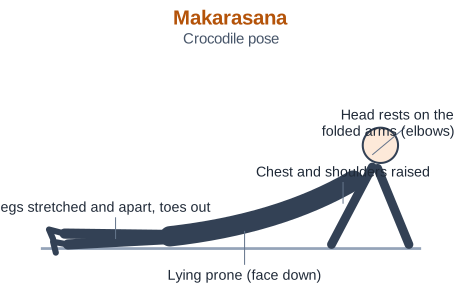
Drawn by us to help you understand the concept clearly, and verified to make sure it's accurate. For exams, practice from your textbook's own diagram.
A line drawing of a person lying prone (face down) with the legs stretched and spread, toes pointing out, the forearms folded in front and the head resting on the triangle formed by the …
Technique
- Take a prone lying position with the hands by the sides of the thighs.
- Slowly spread out both legs; the toes should point out and the heels turn inward.
- Slowly fold the left hand at the elbow, bringing it from below the armpit, and place it on the right shoulder; fold the other hand at the elbow and place it on the left shoulder.
- Place your head on the triangle made by both the elbows.
Breath Awareness
- Inhale as you lift the torso up.
- Exhale while resting the elbows on the floor.
- Inhale by pushing the chest out and taking the shoulders back.
- Exhale and gently lift the chin up while pushing the belly into the floor; then inhale and feel the expansion of the chest and belly.
- Continue to inhale and exhale gently as you remain in this posture.
Benefits
- This is beneficial in asthma.
- It is quite useful for those who have acquired a wrong process of respiration.
- The abdominal muscles get an automatic massage.
Contraindication
This asana should not be performed by those suffering from:
- Heart problem
- Obesity
- Gas or high blood pressure
Why Makarasana helps manage hypertension
Lying fully prone with the head supported and the whole body relaxed removes any muscular effort needed to hold the posture, which makes Makarasana one of the most completely relaxing asanas in the syllabus alongside Shavasana. Because high blood pressure is strongly linked to prolonged muscular and mental tension, a posture that requires zero active effort and encourages slow, natural breathing gives the nervous system a direct opportunity to shift out of its tense, always-on state.
Common mistakes
- Tensing the shoulders or back in an effort to hold a correct shape defeats the purpose of a relaxation asana; every muscle that is not needed to maintain the position should be allowed to go soft.
- Breathing too shallowly, rather than letting the breath settle into its own slow natural rhythm, reduces the calming effect the posture is meant to produce.
- Resting the full weight of the head on the chin or forehead instead of the stacked palms can strain the neck; the triangle made by the folded elbows should take the weight.