Physical Education · Ch 3 — Yoga as Preventive Measure for Lifestyle Disease
Nadi-Shodhana Pranayam
Nadi-Shodhana Pranayam
Nadi-Shodhana Pranayam (Alternate Nostril Breathing)
Nadi means channel and Shodhana means purification, so Nadi-Shodhana is known as the channel for purification. It is also called Anulom Vilom or Alternate Nostril Breathing, and in the CBSE Class 12 Physical Education course it is a key pranayama for calming the mind and managing hypertension.
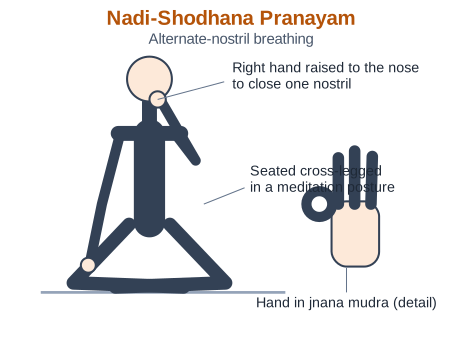
Drawn by us to help you understand the concept clearly, and verified to make sure it's accurate. For exams, practice from your textbook's own diagram.
A line drawing of a bare-torso person sitting cross-legged in a meditation posture with one hand raised to the nose to close a nostril, alongside a separate detail of the hand held in jnana mud …
Technique
- Sit in any comfortable meditation asana. Keep the head and spine straight and the eyes closed.
- Place the right hand in jnana mudra. Close the right nostril with the right thumb and inhale through the left nostril for 5 counts.
- After 5 counts of breath, release the pressure of the thumb from the right nostril and close the left nostril with the ring finger.
- Exhale through the right nostril for 10 counts, keeping the respiration rate slow, deep and silent. Then inhale through the right nostril for 5 counts.
- Continue for 5 rounds of practice, or for 3 to 5 minutes, making sure that no sound is produced as the air passes through the nostrils.
Benefits
- Calms and steadies the mind, improves focus and concentration, and balances the left and right hemispheres of the brain.
- Strengthens the immune system.
- Manages hypertension.
- Provides sufficient oxygen for the functioning of every cell in the body.
- Removes waste products such as carbon dioxide and other toxic gases from the body, so that they do not remain in the blood stream.
Contraindications
- Avoid practising on a very full stomach; allow 2-3 hours after a meal.
- Anyone with a severe cold or fully blocked nostrils should wait until breathing is reasonably clear through the nose.
- Should be practised gently, without force, by anyone with heart disease or very high, unstable blood pressure, ideally under a teacher's guidance.
Why Nadi-Shodhana Pranayam is central to managing hypertension
Alternating the breath between the two nostrils in a slow, even rhythm is one of the most reliable yogic techniques for activating the parasympathetic nervous system, the body's rest-and-digest mode that directly opposes the sympathetic fight-or-flight activity associated with chronically high blood pressure. Because both the inhalation and exhalation are measured and unhurried, the practice trains the breath to naturally slow down, and a slower breathing rate is consistently linked with lower resting blood pressure over time.