Physical Education · Ch 9 — Psychology and Sports
Importance of Psychology in Sports and Exercise
Importance of Psychology in Sports and Exercise
Why does the CBSE Class 11 Physical Education course give psychology its own unit? Because psychology matters for everyone who exercises or plays — not only for elite athletes. Its importance can be seen under four headings.
A. Benefits of exercise and physical activity
- Cognitive aspect. The benefits of physical activity go well beyond the body. Research suggests that being active improves the brain — boosting thinking, mood, attention, problem-solving, strategic planning and even academic achievement in students.
- Emotional aspect. Physical activity creates positive feelings and counters low mood, depression and anxiety, partly because of greater involvement in recreational, health-related and competitive activity. Motivation plays a large part in raising physical capacities such as strength, speed and flexibility. Even short bouts of exercise help, but regular exercise is needed for lasting benefit.
- Social interaction. Exercise lets people take part in both group and individual programmes — a team event, a group class, or a solo activity within a social setting. Group exercise is enjoyable and good for mental health and social well-being; individual exercise, on the other hand, can suit people with low self-esteem or anxiety about body image. Even spectators and fans bond socially at a match.
- Distraction ability. Exercise offers a break from one's current mood. A short bout of exercise helps reduce anxiety through this distraction, while regular exercise brings long-term benefit.
B. Psychological advantages of sports participation
- Life skills. Taking part in sport and competition develops sense, sensitivity and sensibility, helping participants face life's challenges with a positive outlook.
- Developmental aspects. Sport gives participants the chance to build social relationships — making friends, enjoying a team atmosphere and developing a spirit of healthy competition.
- Behaviour modification. Sport increases perceived competence and self-efficacy, and positive experiences strengthen intrinsic motivation.
- Cognitive and motor-skill acquisition. Repeated training and play help improve attention, develop memory, build reasoning ability and sharpen decision-making.
C. Performance enhancement of athletes through sports psychology
Sports psychology helps athletes perform better in several specific ways, summarised below.
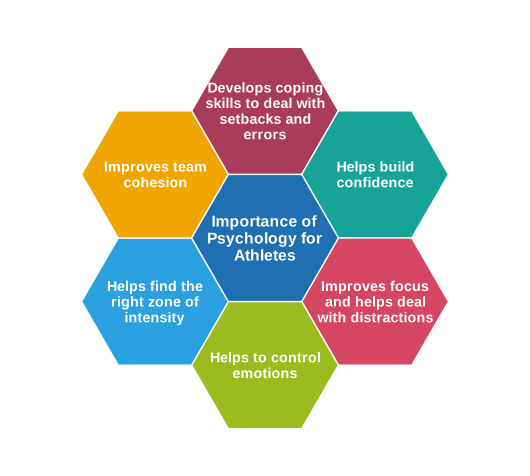
Drawn by us to help you understand the concept clearly, and verified to make sure it's accurate. For exams, practice from your textbook's own diagram.
A radial 'honeycomb' diagram with a central cell reading 'Importance of Psychology for Athletes' surrounded by six cells, each naming a performance benefit: develops coping skills to deal with setbacks and errors; helps find the right zone of intensity; improves team cohesion; improves focus and helps deal with distractio …
…