Q.i) Define pollination. ii) Explain double fertilisation. iii) Draw a labelled diagram of structure of fertilised embryo sac. OR
You're viewing a preview — the full solution, concept, methods & PYQ mapping are locked.
Start your 14-day free trial to unlock the full solution →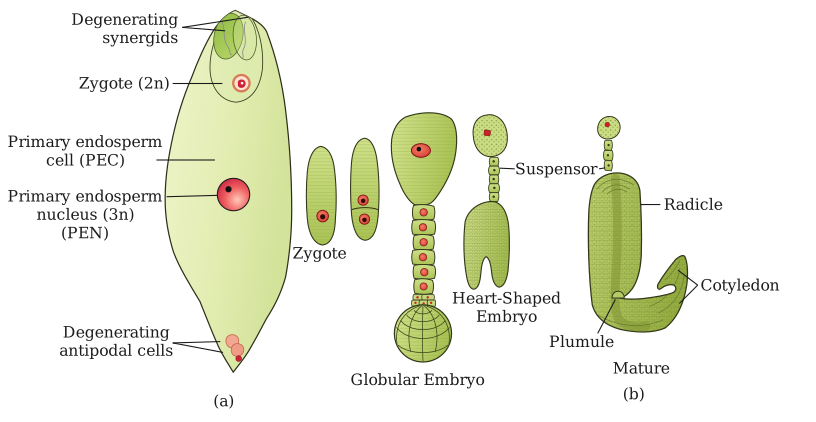
Pollination transfers pollen to the stigma; double fertilisation (syngamy + triple fusion) is unique to flowering plants and produces both the zygote and the primary endosperm nucleus within the embryo sac.
i) Pollination: Pollination is defined as the transfer of pollen grains from the anther (male part) to the stigma (receptive part of the female pistil) of a flower. Depending on the source of pollen, it may be autogamy (same flower), geitonogamy (different flower, same plant) or xenogamy (different plant of the same species).
ii) Double fertilisation: After pollen germinates on the stigma, the pollen tube grows through the style and enters the ovule (usually through the micropyle), releasing two male gametes into the cytoplasm of the synergid. Inside the embryo sac (which has 7 cells and 8 nuclei: one egg cell, two synergids, three antipodal cells, and one central cell with two polar nuclei):
- One male gamete fuses with the egg cell (syngamy), forming the diploid zygote.
- The other male gamete fuses with the two polar nuclei of the central cell (triple fusion), forming the triploid Primary Endosperm Nucleus (PEN).
Since two distinct fusion events take place involving the two male gametes, the process is termed double fertilisation - a unique feature of flowering plants, first discovered by Nawaschin (1898).
iii) Structure of the fertilised embryo sac (described, as text cannot show a hand-drawn figure): …
Unlock everything free for 14 days
- Full step-by-step solutions
- Concept-first explanations
- Methods, shortcuts & mistakes
- PYQ mapping + timed mock tests
Full access for 14 days. No credit card required.