Physical Education · Ch 6 — Test and Measurement in Sports
Chair Sit and Reach Test
Chair Sit and Reach Test
Chair Sit and Reach Test
- Purpose: to determine lower body flexibility.
- Objective: to stretch the lower body as far forward as possible.
- Equipment: a straight-back chair without arms, and an 18-inch ruler.
Procedure
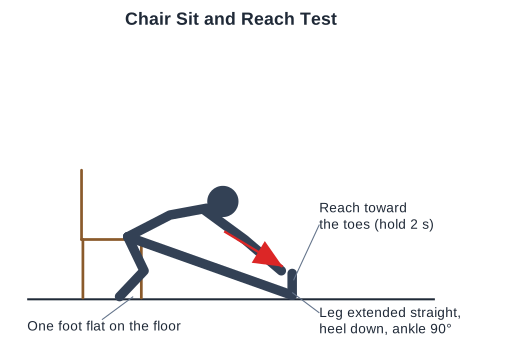
With the chair placed so it stays stable, the participant sits with one foot flat on the floor and the other leg extended forward, the knee straight, the heel on the floor and the ankle bent at 90 degrees. Bending at the hip, the participant slides both hands down towards the toes of the extended leg and holds the position for 2 seconds.
Drawn by us to help you understand the concept clearly, and verified to make sure it's accurate. For exams, practice from your NCERT textbook's own diagram.
A line drawing of an older adult seated on a straight-back armless chair performing the chair sit and reach test. One foot is flat on the floor; the other leg is extended straight forward with the heel down and ankle bent. The person bends forward at the hip, hands sliding down towards the toes of the ex …
Scoring
The distance is measured between the extended middle finger and the tip of the toe, recorded to the nearest 0.5 inch. If the fingers cross the toe, a plus (+) sign is placed before the score; if the participant cannot reach the toe, a minus (-) sign is used.
Why It Matters (Physiological Rationale)
Tight hamstrings and a stiff lower back are extremely common with age and with a sedentary lifestyle, and they restrict the hip's range of motion. The Chair Sit and Reach Test isolates that single range of motion, hip flexion with the knee straight, using a chair instead of the floor so it remains safe and accessible for older adults who may not be able to get up and down from the floor easily.
Benefits of Regular Testing
- Identifies early loss of hamstring and lower-back flexibility, which is strongly linked to poor posture, lower-back pain and reduced walking stride length in older adults.
- Is easy to repeat over time (week to week or year to year) to track whether a stretching programme is working.
- Requires no specialised equipment beyond a chair and a ruler, so it can be run anywhere, including at home.
Common Mistakes & Precautions
- Allowing the extended knee to bend during the reach; this shortens the true stretch and inflates the score, so the tester may gently hold the knee straight if needed.
- Bouncing or jerking forward to gain extra distance, which risks a hamstring or lower-back strain; the reach should be slow and held, never forced.
- Letting the two hands reach unevenly, one further than the other, which makes the measurement unreliable.
- Testing a participant with acute lower-back pain, sciatica or a recent hip/knee injury; the test should be skipped or cleared by a doctor first. …