Physical Education · Ch 3 — Yoga as Preventive Measure for Lifestyle Disease
Shalbhasana
3.2.4
Shalbhasana
The name Shalabhasana comes from the Sanskrit word shalabh, meaning grasshopper or locust. In the final position the raised legs and lifted body resemble a locust, which is how the asana gets its name.
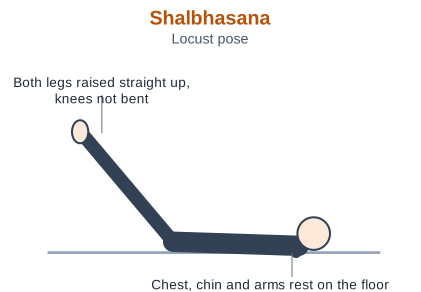
Figure 3.12Line drawing of a person lying prone with both straight legs raised up and back behind them, chest and face resting toward the floor - Shalbhasana (locust pose).
Drawn by us to help you understand the concept clearly, and verified to make sure it's accurate. For exams, practice from your NCERT textbook's own diagram.
A side-profile line drawing of a person lying face-down. Both legs are lifted straight up and backward together without bending at the knees, while the chest, arms and head stay near the floor - the rais …
Technique
- Lie in the prone position with the legs together, toes pointing backward and soles facing the sky. Keep the hands by the sides, palms upward, fingers together, and the forehead touching the ground.
- Fold both hands at the elbows and bring them under the shoulders, as in Bhujangasana, with the fingers together and pointing forward.
- Slowly raise both legs upward together without bending them at the knees, and hold the position.
- Then bring the legs down slowly.
- Return to the original position, bringing the hands back to their place.
Breathing Awareness
- Inhale deeply in the starting position.
- Retain the breath while raising both legs and holding the position.
- Exhale while lowering the legs.
- Keep the breath and movement synchronised.
Benefits
- Helps reduce abdominal fat and tones the abdomen.
- Strengthens the back and neck muscles.
- Helps repair and strengthen the entire spinal cord.
- Helps relieve neck pain and corrects defects in the neck joints.
- Encourages digestion by stretching the intestines and improving their activity.
- Helps correct urinary disorders.
- Strengthens the uterus and the reproductive system.
- Helps correct menstrual problems.
- Strengthens the hip bones and reduces excess thigh muscle.
- Helps relieve constipation.
Contraindications
- Those suffering from acute back pain or a slip disc should avoid this asana.
- Those with severe sciatica should avoid it, as it tightens the whole body from the hips to the feet.
- Those with major menstrual problems or a prolapsed uterus should avoid it. …