Economics · Ch 2 — Consumption Analysis
Consumer's Equilibrium Under the Indifference Curve Approach
8
Consumer's Equilibrium Under the Indifference Curve Approach
The two building blocks above — the indifference map (showing what the consumer would LIKE) and the budget line (showing what he can AFFORD) — combine to determine the consumer's actual equilibrium purchase. A rational consumer aims to reach the HIGHEST possible level of satisfaction that his income permits; graphically, this means reaching the highest indifference curve that his budget line still allows him to touch.
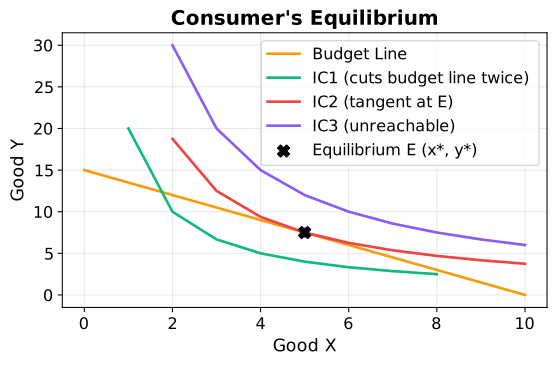
The consumer's equilibrium is reached at the point where the budget line is exactly tangent to an indifference curve — the highest one it can reach. At this tangency point, the slope of the indifference curve (which is ) exactly equals the slope of the budget line (the price ratio ):
…