Physical Education · Ch 3 — Yoga as Preventive Measure for Lifestyle Disease
Uttanmandukasana
Uttanmandukasana
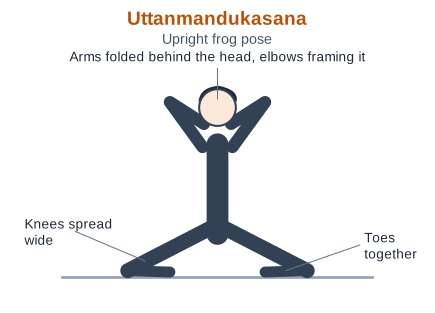
When, in Mandukasana, the head is held within the elbows, the posture becomes Uttanmandukasana, which resembles an upright frog (uttana meaning upright). It is a seated chest- and shoulder-opening posture useful for the breathing it encourages.
Drawn by us to help you understand the concept clearly, and verified to make sure it's accurate. For exams, practice from your textbook's own diagram.
A front-view drawing of a person seated in a wide-kneed kneeling position with the toes together. Both arms are raised and folded behind the head, with each hand reaching the opposite shoulder blade so the elbows frame and hold the head - …
Technique
- Sit in Vajrasana.
- Spread both knees apart, but keep the toes together.
- Fold the right hand backward from above the right shoulder and place the palm below the left shoulder.
- Similarly fold the left hand and place the palm on the right shoulder, so that one elbow rests over the other and the head is held within the elbows.
- To return, slowly remove the hands and bring the knees back together as in the first position.
Benefits
- Helps with diaphragmatic (deep-breathing) movements - valuable for asthma.
- Improves posture.
- Removes back pain and pain in the lumbar region.
- Increases the elasticity of the thigh joint and the shoulders.
Contraindications
- Individuals suffering from arthritis, hernia, chronic or severe back problems, elbow pain, shoulder pain or spinal deformities should not perform this asana.
Because it opens the chest and encourages diaphragmatic breathing, Uttanmandukasana is one of the asanas the NCERT/CBSE syllabus prescribes specifically for bronchial asthma.
Breathing Awareness
- Inhale while settling into Vajrasana and expanding the chest before folding the arms.
- Breathe slowly and evenly once the arms are folded and the head is cradled, letting the chest and belly move freely against the gentle self-imposed restriction of the arms.
- Exhale and release the arms slowly when returning to the starting position.
Why Uttanmandukasana helps with asthma
Holding the head cradled within the crossed elbows gently restricts the shoulders while leaving the chest and diaphragm free to expand fully with each breath, almost like a built-in resistance exercise for diaphragmatic breathing. Because the posture requires the practitioner to breathe deeply just to stay comfortable in the hold, it trains exactly the slow, full, diaphragm-led breath that asthma management depends on, rather than the fast, shallow chest-breathing pattern common during and after an asthma episode.
Common mistakes
- Holding the breath to keep the pose still, rather than letting the belly and chest move with each breath, defeats the purpose of the posture; the breath should stay active throughout.
- Forcing the knees too far apart before the hips are flexible enough to sit comfortably in that width strains the hips and lower back unnecessarily. …