Q.Describe the external head structure of the cockroach with the help of a labelled diagram.
Orientation and shape
The head of Periplaneta americana is small, roughly triangular in outline, and is set onto the body in a bent-under, near-vertical position known as a hypognathous orientation — the mouthparts consequently point downward and somewhat backward rather than forward. The head capsule itself is a hardened box of fused sclerites (cuticular plates), providing a firm base for the sense organs and jaws it carries.
Sense organs of the head
Dorsolaterally, the head carries a pair of large, kidney-shaped (reniform) compound eyes, each built of thousands of individual visual units (ommatidia) that together give wide-field, motion-sensitive mosaic vision. Between the compound eyes, in the position where true simple eyes (ocelli) occur in many other insects, the cockroach instead shows only two pale, translucent patches called fenestrae — vestigial, weakly functional remnants of ocelli. In front of the eyes arise a pair of long, thread-like, many-jointed antennae, richly supplied with sensory receptors for touch and smell, which the cockroach waves constantly to explore its surroundings, locate food, and detect danger in the dark.
The mouthpart assembly
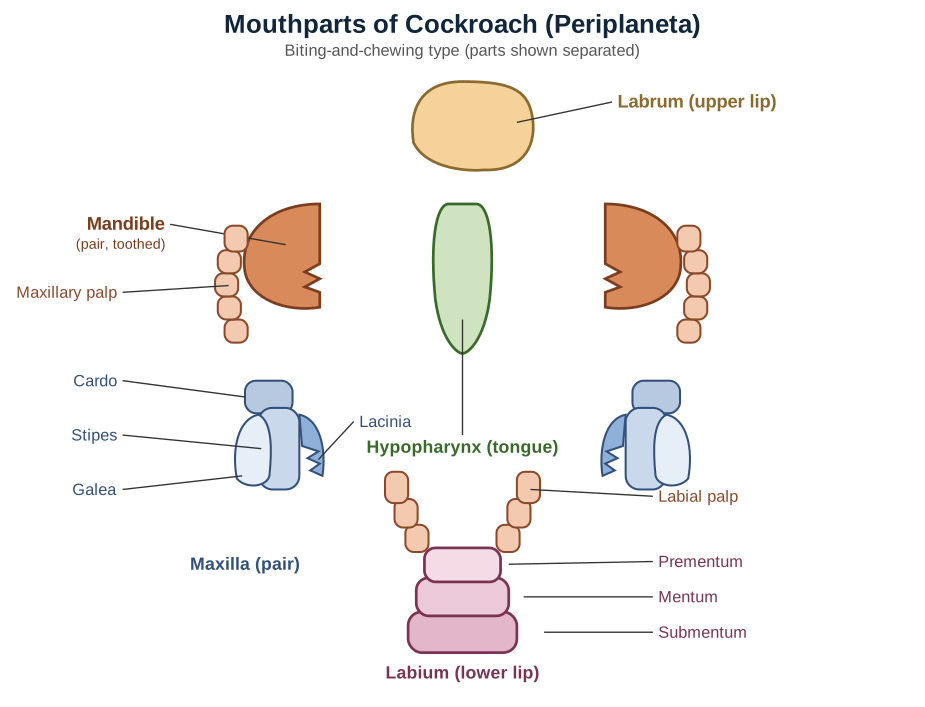
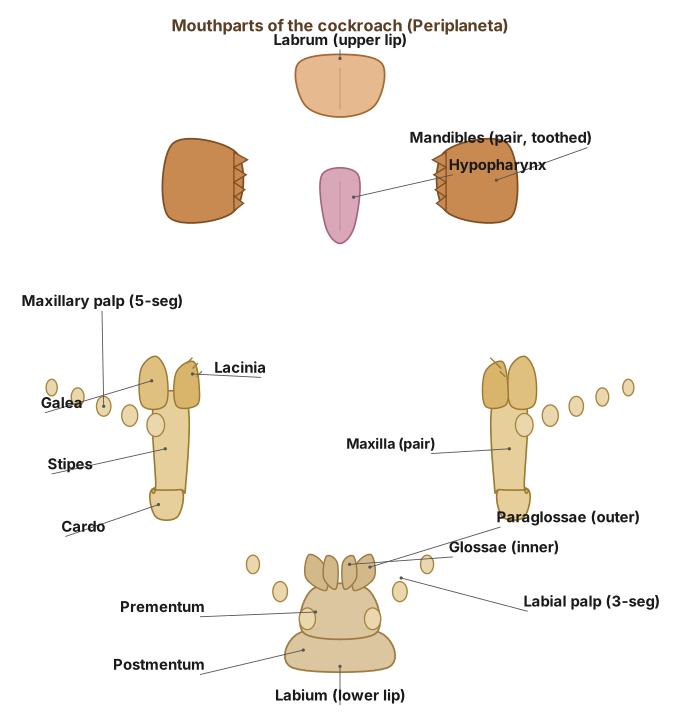
Slung from the underside of the head is the full chewing-type mouthpart apparatus, arranged from outermost to innermost:
- Labrum — an unpaired flap-like upper lip, hinged to the clypeus, covering the other mouthparts and helping hold/taste food.
- Mandibles — a pair of hard, dark, tooth-edged jaws that move transversely to bite, cut and crush solid food.
- Maxillae — a pair of appendages, each with a sensory maxillary palp, that manipulate food toward the mouth and add taste/touch input.
- Labium — the fused second maxillae, forming the floor (lower lip) of the mouth region, bearing a pair of labial palps and supporting the food mass from below.
- Hypopharynx — a median, tongue-like lobe on the floor of the pre-oral cavity; the common salivary duct opens near its base, so it helps mix saliva into the food and assists swallowing.
Functional summary
Together, this arrangement — a hardened, hypognathous head capsule carrying wide-field compound eyes, vestigial fenestrae, sensitive antennae, and a coordinated set of five chewing mouthparts — equips the cockroach superbly for a nocturnal scavenging life: it can detect food, threats and its surroundings largely by touch and smell, confirm and process almost any organic food item by biting and grinding, and remain alert to danger even in near-total darkness.
[!ANSWER] The head of the cockroach is a small, hypognathous (downward-bent), triangular capsule bearing a pair of compound eyes, two vestigial fenestrae in place of ocelli, a pair of sensory antennae, and the full biting-and-chewing mouthpart assembly (labrum, mandibles, maxillae, labium, hypopharynx) slung beneath it.
Unlock everything free for 14 days
- Full step-by-step solutions
- Concept-first explanations
- Methods, shortcuts & mistakes
- PYQ mapping + timed mock tests
Full access for 14 days. No credit card required.