Question of 54
Q.Describe the structure of the heart of man with the help of neat labelled diagram.
Telangana TsbieTelangana Board of Intermediate Education 2022Subjective· 8mImportance★★★★★
0% · 0/54 Questions
You're viewing a preview — the full solution, concept, methods & PYQ mapping are locked.
Start your 14-day free trial to unlock the full solution →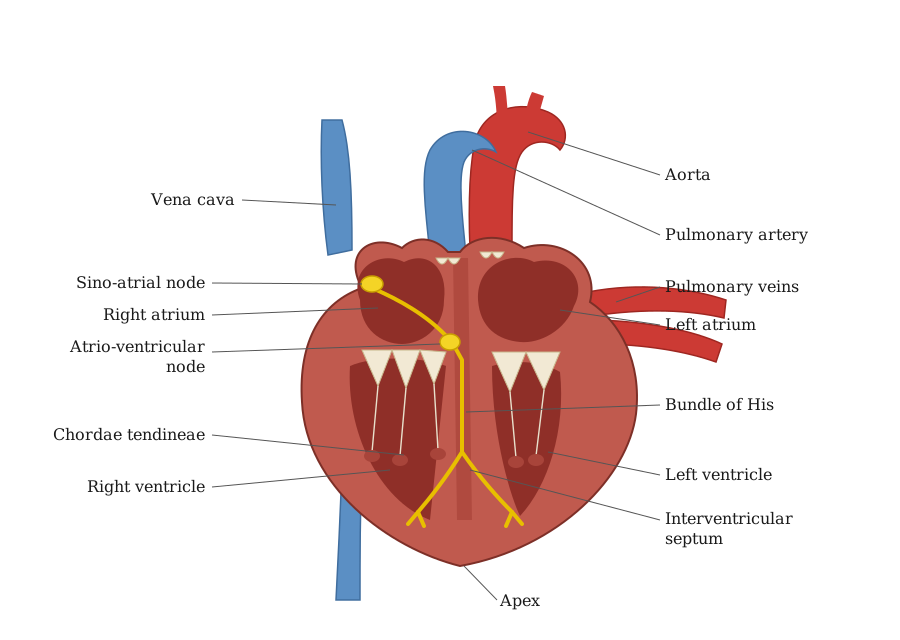
The heart is a four-chambered muscular pump with valves ensuring one-way blood flow and major vessels connecting it to the pulmonary and systemic circuits.
A labelled diagram cannot be rendered in this text answer, but the structure of the human heart, as it would be labelled, is described below.
Location and covering: The heart lies in the thoracic cavity, between the two lungs, slightly tilted to the left, enclosed in a double-membraned protective sac called the pericardium, which contains pericardial fluid to reduce friction.
Chambers (four):
- Right atrium (RA) — receives deoxygenated blood from the body via the superior and inferior venae cavae.
- Right ventricle (RV) — receives blood from RA (through the tricuspid valve) and pumps it to the lungs via the pulmonary artery.
- Left atrium (LA) — receives oxygenated blood from the lungs via the pulmonary veins.
- Left ventricle (LV) — receives blood from LA (through the bicuspid/mitral valve) and pumps it to the whole body via the aorta; it has the thickest muscular wall since it pumps blood over the greatest distance/pressure.
Valves:
- Tricuspid valve — between right atrium and right ventricle.
- Bicuspid (mitral) valve — between left atrium and left ventricle.
- Semilunar valves — guard the base of the pulmonary artery and the aorta, preventing backflow into the ventricles. …
Unlock everything free for 14 days
- Full step-by-step solutions
- Concept-first explanations
- Methods, shortcuts & mistakes
- PYQ mapping + timed mock tests
Full access for 14 days. No credit card required.