Q.Describe the structure of the heart of a man with the help of a neat labelled diagram.
You're viewing a preview — the full solution, concept, methods & PYQ mapping are locked.
Start your 14-day free trial to unlock the full solution →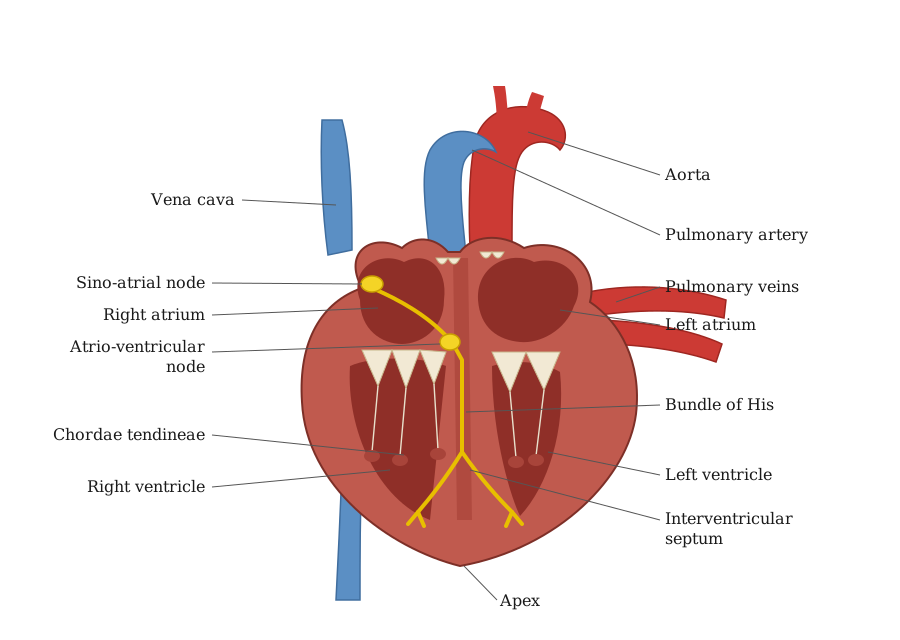
The human heart is a four-chambered, myogenic muscular pump located in the thoracic cavity, with two receiving chambers (atria) and two pumping chambers (ventricles), separated by septa and valves that keep blood flowing in one direction.
No figure was supplied with this question, so the structure is described here in detail; for the exam, draw and label it following the standard NCERT/textbook diagram of the human heart in longitudinal (V.S.) section.
Location and covering: The heart lies in the thoracic cavity, in the mediastinum, between the two lungs, slightly tilted to the left, and is enclosed within a double-walled membranous sac called the pericardium, which contains pericardial fluid that reduces friction during heartbeats.
Chambers (four): The heart wall is composed of cardiac muscle (myocardium).
- Right atrium: A thin-walled upper chamber on the right that receives deoxygenated blood from the body via the superior and inferior venae cavae, and from the heart's own tissue via the coronary sinus.
- Right ventricle: A thick-walled lower chamber on the right that receives blood from the right atrium (via the tricuspid valve) and pumps deoxygenated blood to the lungs through the pulmonary artery (via the pulmonary semilunar valve).
- Left atrium: A thin-walled upper chamber on the left that receives oxygenated blood from the lungs via the pulmonary veins.
- Left ventricle: The most muscular chamber (thickest wall, as it pumps blood to the entire body), which receives blood from the left atrium (via the bicuspid/mitral valve) and pumps oxygenated blood into the aorta (via the aortic semilunar valve) for systemic circulation.
Septa: An inter-atrial septum separates the two atria, and an inter-ventricular septum separates the two ventricles, keeping oxygenated and deoxygenated blood from mixing.
Valves:
- Tricuspid valve (right atrioventricular valve) - between right atrium and right ventricle, has three cusps.
- Bicuspid/mitral valve (left atrioventricular valve) - between left atrium and left ventricle, has two cusps.
- Semilunar valves - at the base of the pulmonary artery and the aorta, prevent backflow of blood into the ventricles during relaxation. …
Unlock everything free for 14 days
- Full step-by-step solutions
- Concept-first explanations
- Methods, shortcuts & mistakes
- PYQ mapping + timed mock tests
Full access for 14 days. No credit card required.