Q.Describe reproductive system of a man. Draw a labelled diagram of it.
You're viewing a preview — the full solution, concept, methods & PYQ mapping are locked.
Start your 14-day free trial to unlock the full solution →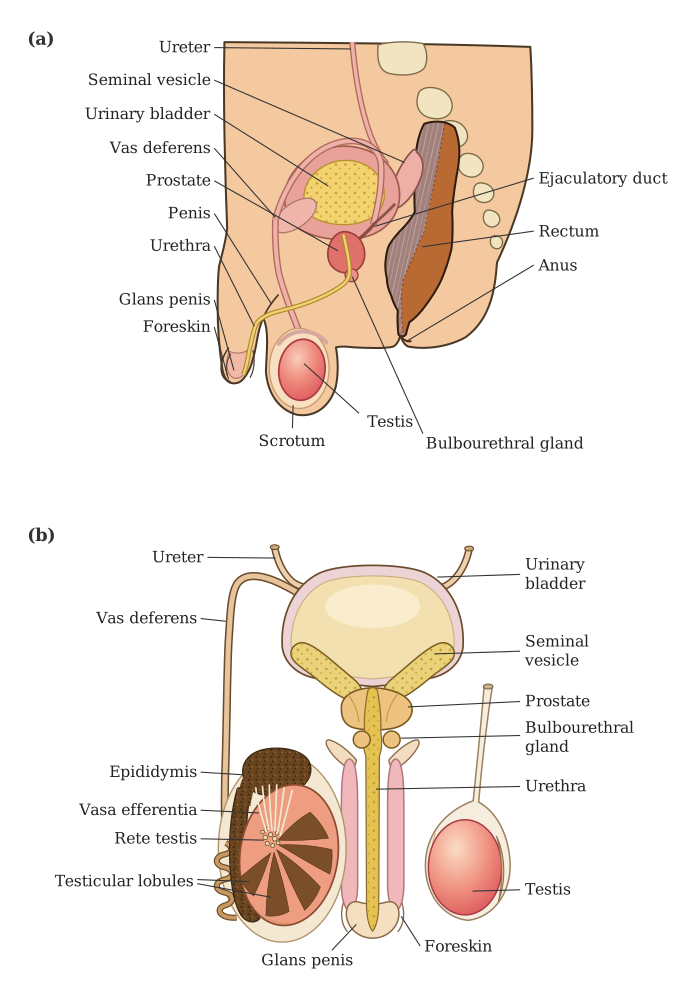
The male reproductive system comprises paired testes (which produce sperm and testosterone), a duct system (epididymis, vas deferens, ejaculatory duct, urethra) that transports and matures sperm, accessory glands that contribute seminal fluid, and the penis, the copulatory organ.
No figure was supplied with this question, so the structure is described in detail here; for the exam, draw and label it following the standard NCERT/textbook diagram of the human male reproductive system.
Main components:
-
Testes: A pair of oval organs located outside the abdominal cavity in a pouch called the scrotum, which maintains a temperature about 2-2.5 degreesC lower than body temperature, necessary for normal spermatogenesis. Each testis contains highly coiled seminiferous tubules, where sperm are produced by spermatogenesis; between the tubules lie Leydig (interstitial) cells, which secrete the male sex hormone testosterone. Sertoli cells within the seminiferous tubules nourish the developing sperm.
-
Accessory ducts: From each testis, sperm pass into a coiled tube called the epididymis (attached to the outer surface of each testis), where they are stored and mature. The epididymis leads into the vas deferens (ductus deferens), a long muscular tube that ascends and loops over the urinary bladder, receiving a duct from the seminal vesicle to form the ejaculatory duct, which opens into the urethra.
-
Urethra: A common passage for both sperm (semen) and urine, running through the penis and opening to the exterior.
-
Accessory glands:
- A pair of seminal vesicles, which secrete a fructose-rich fluid that nourishes and activates sperm and forms a major part of seminal plasma.
- The prostate gland, a single gland that secretes a milky, alkaline fluid that helps neutralise vaginal acidity and activates sperm motility.
- A pair of bulbourethral (Cowper's) glands, which secrete a mucous fluid that lubricates the urethra prior to ejaculation. …
Unlock everything free for 14 days
- Full step-by-step solutions
- Concept-first explanations
- Methods, shortcuts & mistakes
- PYQ mapping + timed mock tests
Full access for 14 days. No credit card required.