Biology · Ch 5 — Morphology of Flowering Plants
The Root
The Root
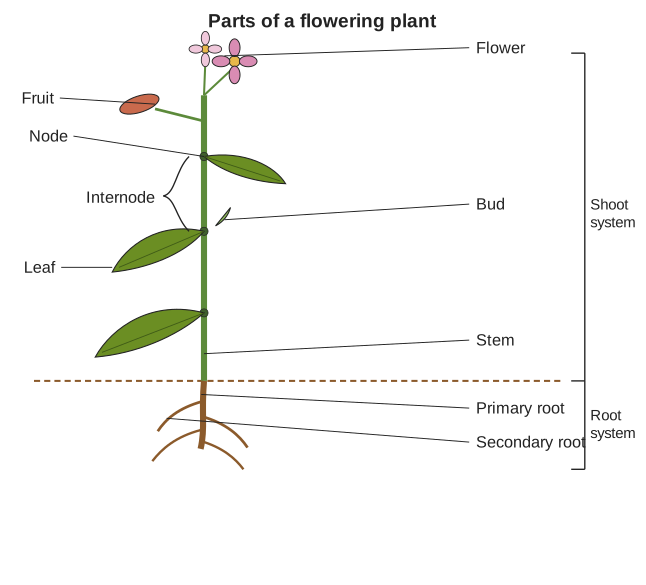
If you pull out any weed you will notice that all of them have roots, stems and leaves, and may also bear flowers and fruits. The underground part of the flowering plant is the root system, while the portion above the ground forms the shoot system.
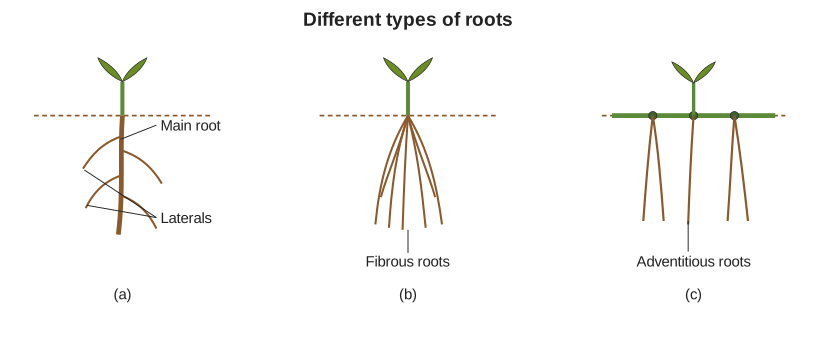
In the majority of the dicotyledonous plants, the direct elongation of the radicle leads to the formation of the primary root, which grows inside the soil. The primary root bears lateral roots of several orders that are referred to as secondary, tertiary, etc. roots. The primary root together with its branches constitutes the tap root system, as seen in the mustard plant.
In monocotyledonous plants, the primary root is short lived and is replaced by a large number of roots. These roots originate from the base of the stem and constitute the fibrous root system, as seen in the wheat plant.
In some plants, like grass, Monstera and the banyan tree, roots arise from parts of the plant other than the radicle and are called adventitious roots. …
Drawn by us to help you understand the concept clearly, and verified to make sure it's accurate. For exams, practice from your textbook's own diagram.
This figure lays out a typical flowering plant as two connected systems. Below the ground lies the root system, growing from the radicle: a main tap root bearing thinner lateral roots and, near the tips, fine root hairs that absorb water and minerals. Above the ground is the shoot system, developing from the plumule. It is built around the stem, which is marked off into nodes, where leaves and branches arise, and internodes, the lengths between them. The stem carries green leaves that make food, buds that will grow into shoots or flowers, and, in a mature plant, the reproduct …
Drawn by us to help you understand the concept clearly, and verified to make sure it's accurate. For exams, practice from your textbook's own diagram.
The figure contrasts three kinds of root systems. In a tap root system, seen mostly in dicot plants, the radicle grows into one strong primary root that grows downward and gives off smaller lateral roots along its length. In a fibrous root system, typical of monocots such as grasses and wheat, the primary root is short-lived and is replaced by a dense cluster of many thin roots of similar size that spread out from the base of the stem. In adventitious roots, the roots do not come from the radicle at all but arise from other plant parts such as the stem or leaves, …