Biology · Ch 5 — Morphology of Flowering Plants
The Inflorescence
The Inflorescence
A flower is essentially a modified shoot: at the tip of this shoot the shoot apical meristem changes into a floral meristem. As the flower forms, the internodes do not elongate and the axis becomes condensed, and the apex, instead of producing leaves, now produces different kinds of floral appendages laterally at its successive nodes. When a shoot tip itself transforms directly into a flower, that flower is always solitary, borne singly. In most cases, however, several flowers are arranged together on a common axis, and the arrangement of flowers on the floral axis is termed the inflorescence.
The way the apex behaves — whether it gets used up in forming a flower or continues to grow — decides the type of inflorescence. On this basis two major types are defined:
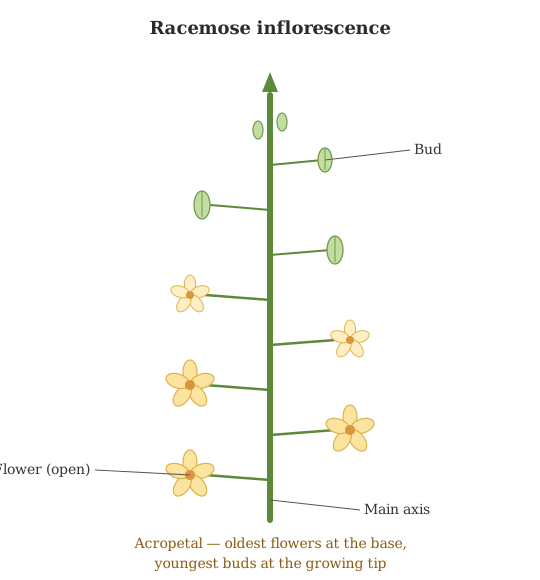
- Racemose inflorescence — the main axis continues to grow and does not terminate in a flower. The flowers are borne laterally along this growing axis in an acropetal succession, meaning the older, mature flowers are towards the base and the younger ones towards the growing tip. …
Drawn by us to help you understand the concept clearly, and verified to make sure it's accurate. For exams, practice from your textbook's own diagram.
This figure illustrates a racemose inflorescence, one of the two main ways flowers are grouped on a floral axis. Here the main axis keeps growing at its tip and does not end in a flower, so it can go on adding new flowers. The flowers are borne laterally along this continuing axis in acropetal succession, which means the oldest, first-formed flowers are near the base and the youngest buds are near the growing top. As a result the lower flowers open first while the tip still bears developing buds. This …
Drawn by us to help you understand the concept clearly, and verified to make sure it's accurate. For exams, practice from your textbook's own diagram.
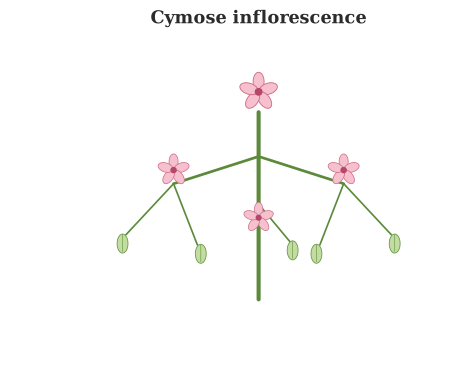
This figure shows a cymose inflorescence, the second main pattern of flower grouping. In this type the main axis stops growing because it ends in a flower, so further growth continues only from side branches, which in turn also end in flowers. The flowers are therefore borne in basipetal order: the oldest, terminal flower forms first at the tip while younger flowers develop below it toward the base. This is the reverse of the racemose pattern. Because the tip is used up by a flower early on, the axis has limited, defi …