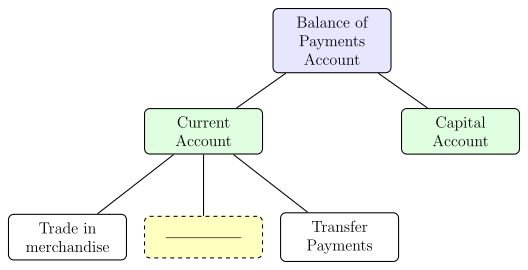
Q.Study the following figure carefully and choose the correct alternative to fill in the blank: Figure (tree diagram): Balance of Payments Account branches into → Current Account and Capital Account. Current Account further branches into → Trade in merchandise | __________ (blank to be filled) | Transfer Payments. Alternatives: (A) Investments (B) Trade of Services (C) External Borrowings (D) External Assistance
You're viewing a preview — the full solution, concept, methods & PYQ mapping are locked.
Start your 14-day free trial to unlock the full solution →The Current Account records all transactions in goods, services, income, and transfers; the missing component between merchandise trade and transfer payments is Trade of Services.
The Balance of Payments is a systematic record of all economic transactions between residents of a country and the rest of the world over a given period. It divides into two main accounts: the Current Account and the Capital Account (or Financial Account in modern usage). Understanding what belongs where requires clarity on the nature of the transaction.
The Current Account captures flows that do not create future claims or liabilities — it records the exchange of real resources and one-way transfers happening now. Think of it as the account that tracks what we earn and spend internationally in the present period, without building up assets or debts for the future.
Within the Current Account, transactions fall into four categories:
-
Trade in merchandise (visible trade): exports and imports of physical goods — cars, wheat, machinery, textiles. This is the most visible part of international trade.
-
Trade in services (invisible trade): exports and imports of intangible services — shipping, banking, insurance, tourism, software, consulting. A foreign tourist spending in India is a service export; an Indian student paying tuition abroad is a service import.
-
Income flows: earnings on investments and compensation of employees — dividends from foreign shares, interest on loans, wages of cross-border workers. These are returns to factors of production located abroad.
-
Transfer payments (unilateral transfers): one-way flows with no quid pro quo — remittances from workers abroad, gifts, grants, foreign aid. No good or service is exchanged in return.
The tree diagram shows three branches under Current Account: "Trade in merchandise," a blank, and "Transfer Payments." The blank sits between goods trade and transfers, which is exactly where services trade belongs in the standard classification. Services are the second major component of trade flows, distinct from physical goods but equally part of current transactions. …
Unlock everything free for 14 days
- Full step-by-step solutions
- Concept-first explanations
- Methods, shortcuts & mistakes
- PYQ mapping + timed mock tests
Full access for 14 days. No credit card required.