Computer Science · Ch 3 — Emerging Trends
Internet of Things (IoT)
Internet of Things (IoT)
The "computer network" we usually talk about is a network of computers: laptops, desktops, servers, and portable devices such as tablets, smartphones and smart watches, connected by wire or wirelessly and communicating over the Internet or a LAN.
Now stretch that idea. What if our bulbs, fans and refrigerator also joined the network? How would they communicate with each other — and what would they say? Imagine the tasks that could be accomplished if all these devices had smart connectivity, could talk amongst themselves, and could also talk with us through our computers or smartphones.
What is the Internet of Things?
The Internet of Things (IoT) is a network of devices that have embedded hardware and software to communicate — connect and exchange data — with other devices on the same network (Figure 3.10).
The key insight is that the ingredients already exist:
- In a typical household today, many devices already contain advanced hardware (microcontrollers) and software.
- But these devices work in isolation from each other, needing maximum human intervention for operating instructions and input data.
IoT's goal is to bring these devices together to work in collaboration, assisting each other and forming an intelligent network of things.
What that looks like in practice …
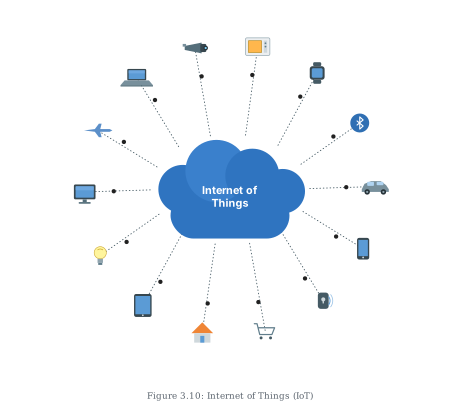
Drawn by us to help you understand the concept clearly, and verified to make sure it's accurate. For exams, practice from your textbook's own diagram.
This illustration is a picture of the Internet of Things as a network. At the centre floats a blue cloud labelled "Internet of Things". From it, dotted lines radiate outward through small black dot nodes to icons of connected devices arranged all around: a laptop, a CCTV camera, a microwave oven, a smart watch, a Bluetooth symbol, a car, a smartphone, a smart door lock, a shopping cart, a house, a tablet, a light bulb, a desktop monitor and even an aeroplane.
Two features of the drawing carry the lesson:
- The mix of devices. Alongside conventional computing devices (laptop, smartphone, tablet, desktop) sit everyday objects — a microwave, a door lock, a light bulb, a car, a whole house. This is the section's central idea: IoT extends the familiar "network of computers" to a network of things, each fitted with embedded hardware and software so it can connect and exchange data. …