Exercise 10.1 · Q4
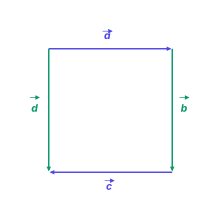
Q.In the figure (Fig 10.6), four vectors , , and are shown. Identify the following vectors:
(i) Coinitial
(ii) Equal
(iii) Collinear but not equal.
Yanam CbseNCERTSubjective· 2mImportance★★★★★est
3% · 4/153 Questions
You're viewing a preview — the full solution, concept, methods & PYQ mapping are locked.
Start your 14-day free trial to unlock the full solution →From Fig 10.6: coinitial and ; equal and ; collinear but not equal and .
The three tests
- Coinitial vectors share the same initial point (tail), regardless of length or direction.
- Equal vectors have both the same magnitude and the same direction (they may start anywhere).
- Collinear vectors lie along the same line or parallel lines; they may point the same way or opposite ways and may have different lengths.
Reading the figure
- Coinitial — looking at the tails, and begin at the same point, so they are coinitial.
- Equal — and are drawn with the same length and pointing the same way, so . …
Unlock everything free for 14 days
- Full step-by-step solutions
- Concept-first explanations
- Methods, shortcuts & mistakes
- PYQ mapping + timed mock tests
Full access for 14 days. No credit card required.