Biology · Ch 5 — Morphology of Flowering Plants
Parts of a Flower
Parts of a Flower
Each flower normally has four floral whorls, namely the calyx, corolla, androecium and gynoecium, arranged successively on the thalamus. Of these, the calyx and corolla are the accessory whorls — they assist in reproduction but are not directly involved in it — while the androecium and gynoecium are the essential or reproductive whorls, the androecium being the male reproductive part and the gynoecium the female reproductive part. The calyx is the outermost whorl and is …
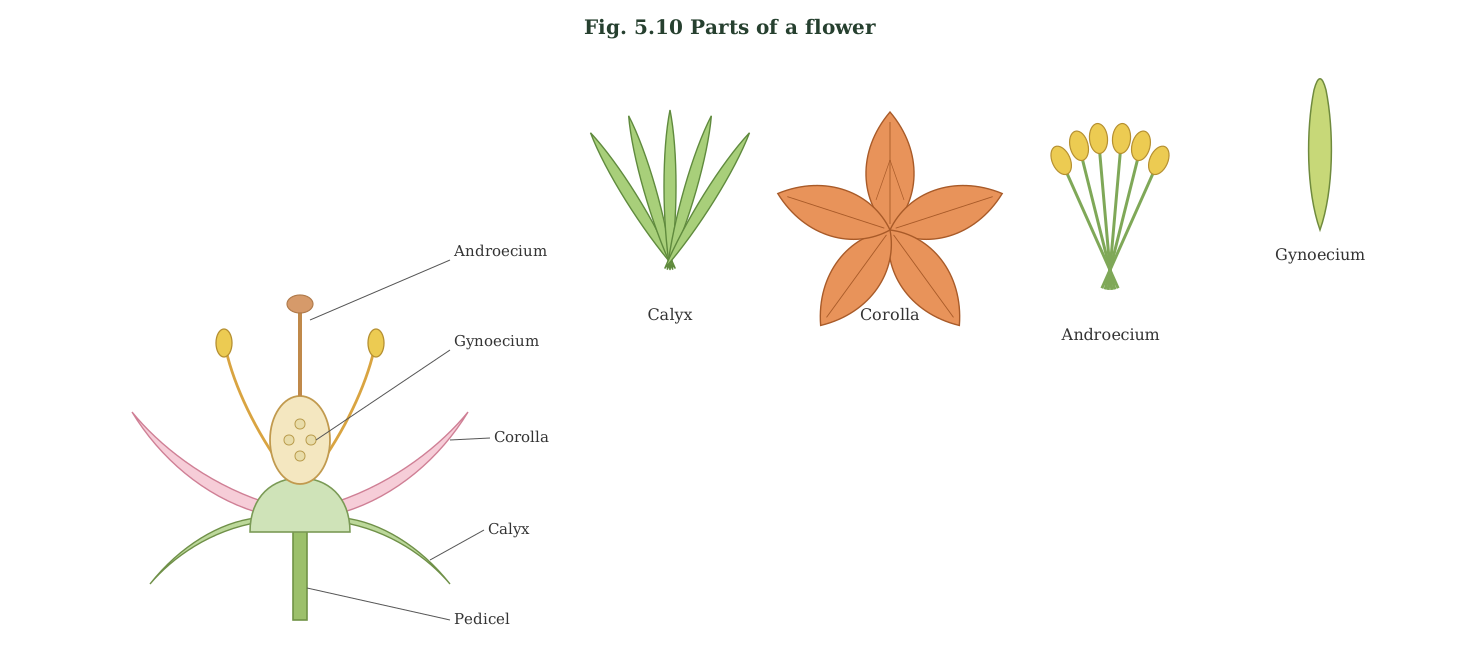
Drawn by us to help you understand the concept clearly, and verified to make sure it's accurate. For exams, practice from your NCERT textbook's own diagram.
The figure identifies the four whorls of a typical flower, all arranged on the swollen tip of the stalk called the thalamus. The outermost whorl is the calyx, made of leaf-like green sepals that protect the flower in the bud. Next comes the corolla, made of coloured petals that attract pollinators. Inside these is the androecium, the male whorl, consisting of stamens, each having a pollen-bearing anther held up by a slender filament. At the centre is the gynoecium, the female whorl, made of one or more pistils; each pistil has a …