Applied Mathematics · Ch 1 — Numbers, Quantification and Numerical Applications
Pipes and Cisterns
Pipes and Cisterns
Pipes and cisterns problems apply the idea of rates to tanks being filled or drained. A pipe that fills a tank is called an inlet pipe, while one that drains or empties it is called an outlet pipe. When several inlets and outlets are connected to the same tank at once, the net effect is the difference between the total work done by the inlets and the total work done by the outlets.
The key idea is to think in terms of the fraction of the tank completed per unit time. If a pipe can fill a tank by itself in hours, then in one hour it fills of the tank; if a pipe can empty a full tank in hours, then in one hour it empties of the tank. When an inlet and an outlet operate together, their combined effect in one hour is the difference of their individual rates:
Combined fraction filled per hour …
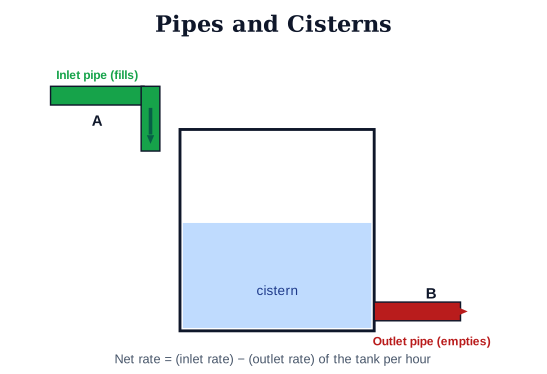
Drawn by us to help you understand the concept clearly, and verified to make sure it's accurate. For exams, practice from your NCERT textbook's own diagram.
An inlet pipe fills the cistern and an outlet pipe empties it; the net filling rate is t …