Q.Draw a neat diagram of a maize grain showing the internal structure and label any five parts.
You're viewing a preview — the full solution, concept, methods & PYQ mapping are locked.
Start your 14-day free trial to unlock the full solution →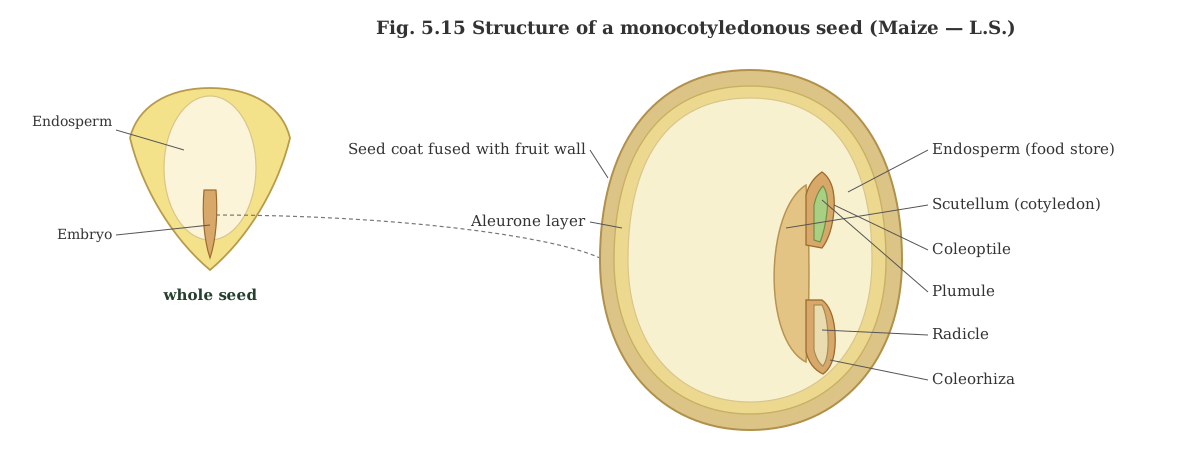
A maize grain is a monocotyledonous fruit (caryopsis) with a fused pericarp and seed coat, containing a large starchy endosperm and a small embryo with a single cotyledon (scutellum).
Let us delve into the fascinating internal architecture of a maize grain, which is botanically classified as a caryopsis – a type of fruit where the fruit wall (pericarp) is fused with the seed coat. This fusion is a distinctive feature of grains like maize, wheat, and rice, making the entire structure appear as a single seed. Understanding its internal components is crucial for comprehending its function in germination and its nutritional value.
When you examine a maize grain in longitudinal section, you primarily observe two major regions: the endosperm and the embryo. These two parts are distinctly separated by a specialized layer.
-
Pericarp and Seed Coat: The outermost layer you encounter is the pericarp, which is the fruit wall. In maize, this pericarp is intimately fused with the seed coat, forming a protective outer covering that is tough and resistant. This fusion is why we often refer to a maize grain as a "seed" in common parlance, even though it is technically a fruit.
-
Endosperm: This is the largest part of the maize grain, occupying the majority of its volume. The endosperm is the primary storage tissue, rich in starch, which serves as the food reserve for the developing embryo during germination. It is typically yellowish-white.
- Aleurone Layer: Surrounding the starchy endosperm, towards the periphery, is a distinct layer called the aleurone layer. This layer is usually single-celled thick and is rich in proteins. It plays a vital role during germination by secreting enzymes, such as alpha-amylase, which break down the stored starch in the endosperm into simpler sugars that the embryo can utilize.
-
Embryo: The embryo is relatively small and is embedded in the endosperm, usually towards one side. It is the miniature plant that will develop into a seedling upon germination. The embryo of a maize grain, being a monocot, consists of:
- Scutellum: This is the single, shield-shaped cotyledon (seed leaf) characteristic of monocots. It is not involved in food storage itself but acts as a conduit, absorbing nutrients from the endosperm and transferring them to the growing embryonal axis. It is pressed against the endosperm.
- Embryonal Axis: This is the central part of the embryo from which the root and shoot systems develop. It comprises:
- Plumule: This is the embryonic shoot, consisting of a shoot apex and a few young leaves. It is protected by a sheath-like structure called the coleoptile. The coleoptile emerges first during germination, protecting the delicate plumule as it pushes through the soil.
- Radicle: This is the embryonic root, which develops into the primary root of the seedling. It is protected by a protective sheath called the coleorhiza. The coleorhiza also emerges early during germination, protecting the radicle.
The fusion of the pericarp and seed coat is a defining characteristic of a caryopsis, distinguishing it from other fruit types. The aleurone layer's role in enzyme secretion for starch breakdown is also a key functional aspect.
A neat, labelled diagram of a maize grain's internal structure should depict the following, described here step by step so it can be reproduced accurately.
Description for Drawing a Maize Grain Diagram: …
Unlock everything free for 14 days
- Full step-by-step solutions
- Concept-first explanations
- Methods, shortcuts & mistakes
- PYQ mapping + timed mock tests
Full access for 14 days. No credit card required.