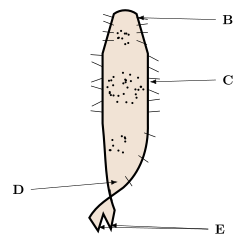
Q.(a) Identify the figure given below.
You're viewing a preview — the full solution, concept, methods & PYQ mapping are locked.
Start your 14-day free trial to unlock the full solution →The figure depicts a pollen tube — the tubular outgrowth produced when a pollen grain germinates on a receptive stigma — growing down through the tissue of the pistil and carrying its two male gametes to the ovule; these two male gametes (labelled E, shown as the two prong-like tips at the growing end of the tube) are what bring about double fertilisation, the hallmark reproductive event of flowering plants.
Basis for identification: The figure is an elongated tubular structure that narrows at one end, widens along its body, curves/bends as it progresses, and forks into two distinct pointed structures at its growing tip. This shape — a growing tube that ends in exactly two discrete bodies at its tip — matches the standard textbook figure of a pollen tube delivering its two male gametes into the embryo sac, rather than any other single structure in this chapter.
When a compatible pollen grain lands on the stigma, it absorbs water and germinates, putting out a pollen tube that grows through the tissue of the stigma and style, carrying the vegetative (tube) nucleus at its growing tip and, following division of the generative cell, two non-motile male gametes. The pollen tube ultimately enters the ovule (most commonly through the micropyle) and discharges its contents, including the two male gametes, into the cytoplasm of one of the synergids of the embryo sac.
…
Unlock everything free for 14 days
- Full step-by-step solutions
- Concept-first explanations
- Methods, shortcuts & mistakes
- PYQ mapping + timed mock tests
Full access for 14 days. No credit card required.